GET SOCIAL WITH US
RECENT ARTICLES


Newsletter
Keep up-to-date with the latest promotions, news and releases!
Jewellery That Relies on Friction vs Jewellery That Relies on Threads
Body jewellery is held in place in different ways depending on its design. Some pieces rely on friction to stay secure, while others use threaded mechanisms to lock parts together. Although both systems are widely used in body jewellery, they behave very differently when worn.
Understanding how these mechanisms work helps you choose jewellery that feels secure, comfortable, and appropriate for the piercing you have. Whether you wear plugs, tunnels, labret studs, or nose jewellery, knowing how friction and threaded systems function can make a big difference to your overall experience.
What Is Friction-Based Jewellery?
Friction-based jewellery stays in place through pressure or tension rather than a mechanical screw. Instead of twisting parts together, the jewellery holds itself in position because the fit is tight enough to resist movement.

Common examples of friction-based jewellery include double-flare plugs, tunnels worn without O-rings, and certain push-fit or threadless pieces. In these designs, the jewellery relies on the natural elasticity of the piercing or the tension between components to remain secure.
Because there are no threads involved, friction-based jewellery usually has a smooth and seamless appearance. This makes it popular for people who prefer jewellery without visible joins or screw fittings.
How Friction Holds Jewellery in Place
In friction-based jewellery, the stability comes from the relationship between the jewellery and the tissue around it.

For example, double flare plugs have slightly wider edges on each side of the jewellery. These flares prevent the plug from slipping out once it has been inserted.
The centre of the jewellery, often referred to as the 'wearable area', is slightly narrower. When the plug sits in the lobe, the flares rest on the outer edges of the ear and hold the jewellery securely in place.
Similarly, threadless jewellery often uses a small pin that bends slightly when inserted into the bar. This bend creates tension, which holds the top firmly inside the post through friction. Because these systems rely on pressure rather than screws, the jewellery often feels smooth and minimal when worn.
What Is Threaded Jewellery?

Threaded jewellery uses a screw mechanism to secure two pieces together. One part of the jewellery contains a threaded post, while the other part contains the matching threaded hole. When twisted together, the threads lock the pieces into place.
This mechanism is commonly used in labret studs, barbells, and some types of nose jewellery. The threaded connection allows the jewellery to stay firmly assembled, even during movement or daily wear.
There are two main types of threaded jewellery. Internally threaded jewellery has the thread inside the bar, while externally threaded jewellery has the thread on the outside of the post. Internally threaded jewellery is often preferred because the smooth outer surface passes through the piercing more comfortably.
Why Threaded Jewellery Feels More Secure
One of the main advantages of threaded jewellery is its mechanical stability. Once the pieces are screwed together properly, the connection is very strong. This makes threaded jewellery ideal for piercings that experience frequent movement or friction.
For example, labret studs used in lip, ear, or cartilage piercings often rely on threaded tops because the jewellery needs to stay secure throughout the day. The screw mechanism prevents the decorative end from slipping out unexpectedly.
Threaded jewellery is also easy to adjust. If the top becomes loose, it can simply be tightened again.
Why Friction Jewellery Feels Simpler
Friction-based jewellery is often appreciated for its simplicity. Without threaded components, the jewellery has fewer moving parts. This can make insertion and removal faster once the wearer becomes familiar with the design.
For stretched ears, friction-based jewellery, such as double-flare plugs, creates a very clean and seamless appearance. There are no visible O rings or screw sections, which many people prefer from a visual perspective.
However, because friction systems rely on the natural elasticity of the piercing, they often require the piercing to be fully healed and flexible before they can be worn comfortably.
Choosing Between Friction and Threaded Jewellery
Both systems have advantages depending on the type of jewellery and piercing involved.
Friction-based jewellery tends to work well in stretched lobes where the tissue can comfortably hold the jewellery in place. Designs like double flare plugs rely on this elasticity to stay secure.
Threaded jewellery is often better suited to standard piercings where a secure mechanical connection is important. Labrets, barbells, and other threaded pieces provide reliable stability for piercings that experience more movement.
In many cases, people wear both types of jewellery depending on the piercing and situation.
Comfort and Maintenance Considerations

From a maintenance perspective, friction-based jewellery often has fewer components to manage. There are no threads to clean or tighten, which simplifies everyday wear.
Threaded jewellery, however, requires occasional checking to ensure the top remains secure. Although the mechanism is strong, movement during daily activities can sometimes loosen the connection slightly.
Comfort can also vary depending on the design. Friction-based jewellery often feels smoother because there are no screw sections. Threaded jewellery may feel more structured but offers reassurance that the pieces are firmly connected.
Final Thoughts
Friction-based jewellery and threaded jewellery use completely different methods to stay secure. Friction designs rely on pressure and tension to hold the jewellery in place, creating a smooth and seamless appearance. Threaded jewellery uses a screw mechanism to lock pieces together, offering strong mechanical stability.
Both systems play an important role in body jewellery design. Understanding how they work allows you to choose jewellery that suits your piercing type, comfort preferences, and everyday lifestyle.
BESTSELLERS


Black Silicone Ear Tunnel
from
£3.00
-v1657710003014.jpg?512x640&transform=resize=350&format=webp)

Black Stainless Steel Double Flared Tunnel
from
£7.00


Clear & Black Single Flare Glass Plug / Gauge
from
£5.00


Opalite Glass Plug / Gauge
from
£6.00


Blue & Green Iridescent Glass Ear Tunnel
from
£11.00


Marble Black & Red Stone Plug / Gauge
from
£9.00


Amethyst Stone Tunnel
from
£8.00


Black Metal Dead Stretching Kit
from
£15.99
NEW
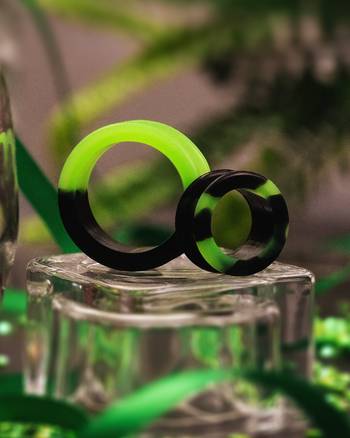

Neon Green & Black Marble Effect Silicone Ear Tunnel
from
£6.00
NEW


Clear & Black Glass Dead Stretching Kit
from
£15.99
NEW