GET SOCIAL WITH US
RECENT ARTICLES


Newsletter
Keep up-to-date with the latest promotions, news and releases!
How to Avoid Stripping Jewellery Threads

Threaded body jewellery is designed to create a secure connection between different parts of the jewellery, but those threads can become damaged if handled incorrectly. Stripped threads are one of the most common jewellery problems, especially with smaller pieces such as labret studs, barbells, and threaded balls.
Once threads become damaged, jewellery may no longer tighten properly, feel secure, or align correctly. In some cases, the entire piece may need replacing. Understanding why threads strip and how to avoid damaging them helps extend the lifespan of your jewellery and keeps piercings safer and more comfortable.
What Does “Stripping Threads” Actually Mean?
Threads are the spiral grooves that allow two jewellery components to screw together. Stripping happens when these grooves become worn down, flattened, or misaligned.
When this occurs, the jewellery can no longer create a proper connection. The threaded end may spin loosely, fail to tighten, or become stuck halfway.
Thread damage usually happens gradually through repeated incorrect handling rather than from a single incident.
Why Jewellery Threads Become Damaged
One of the biggest causes of stripped threads is forcing jewellery together at the wrong angle. If the threads do not line up correctly, tightening them can grind the metal against itself and wear down the grooves.
Over-tightening is another major issue. Many people tighten jewellery far more than necessary, believing this makes it safer. In reality, excessive force increases stress on the threading and can damage both the post and the attachment.
Dirt, dried oils, and residue can also contribute to thread wear. Build-up inside threaded areas increases friction and makes the connection less smooth over time.
Internal vs External Threading

The type of threading used in jewellery affects both comfort and durability.
Internally threaded jewellery has the thread inside the post, while the attachment has a smooth threaded pin that screws into it. This design is often preferred because the wearable surface remains smooth when inserted through the piercing.
Externally threaded jewellery places the thread on the outside of the post itself. While still widely used, external threads are more exposed and may become damaged more easily if handled roughly.
High quality internally threaded jewellery is often more resistant to stripping because the threading is better protected within the structure of the jewellery.
How to Thread Jewellery Properly
One of the simplest ways to avoid stripping threads is to start slowly.
When attaching threaded ends, the pieces should align naturally before any tightening pressure is applied. If resistance is felt immediately, the jewellery may not be aligned correctly.
Many experienced jewellery wearers gently rotate the attachment backwards first until they feel the threads “drop” into alignment. Once aligned, the jewellery should tighten smoothly with minimal force.
If tightening feels rough, uneven, or forced, stopping immediately can prevent permanent damage.
Why Over-Tightening Causes Problems
Body jewellery does not need extreme force to stay secure. Over-tightening places unnecessary stress on the threads and can deform the connection over time.
Small jewellery pieces are particularly vulnerable because their threads are extremely fine. Applying too much pressure can flatten these tiny grooves surprisingly quickly.
A secure fit should feel firm but not forced. The jewellery should stop naturally rather than requiring extra pressure to “lock” into place.
Keeping Threads Clean
Threaded jewellery should be cleaned regularly to prevent build-up inside the grooves.
Skin oils, soap residue, dried saline, and dead skin can all collect around threaded sections over time. This debris increases friction when tightening the jewellery and may eventually damage the threads.
Cleaning jewellery gently with warm water and mild soap helps maintain smooth threading. Particular attention should be paid to smaller areas where residue can collect unnoticed.
Allowing jewellery to dry fully before reassembly also helps prevent trapped moisture around the threads.
How Material Quality Affects Thread Durability
Higher quality materials tend to maintain thread integrity better over time.
Implant grade titanium and high quality surgical steel are commonly used because they are durable, corrosion resistant, and precisely machined. Well manufactured jewellery usually has smoother and more accurate threading, reducing friction during use.
Lower quality jewellery may have rough or poorly cut threads that wear down more quickly. Inexpensive jewellery can also have softer metal that deforms under pressure more easily.
Even perfect handling cannot fully compensate for poor manufacturing quality.
Signs Your Threads May Be Damaged
Thread damage often starts subtly. Jewellery may begin to feel rough when tightening or require more effort than usual to secure.
You may also notice attachments loosening more frequently or failing to sit flush against the jewellery post.
In more advanced cases, the attachment may spin without tightening properly or wobble even when fully screwed on.
Replacing damaged components early helps prevent complete failure or accidental jewellery loss.
Threadless Jewellery as an Alternative
Some people choose threadless jewellery to avoid thread wear entirely.
Threadless systems use tension rather than screw threads to secure the decorative end. The attachment pin bends slightly and holds itself in place through pressure inside the jewellery post.
Because there are no screw threads involved, there is no risk of stripping. However, threadless jewellery still requires proper handling to maintain the correct tension.
For many people, threadless jewellery provides a simpler and lower maintenance alternative to traditional threaded systems.
Final Thoughts
Stripped jewellery threads are usually preventable with proper handling and regular maintenance. Aligning threads carefully, avoiding over-tightening, keeping jewellery clean, and choosing high quality materials all help protect threaded connections over time.
Small habits make a significant difference to how long jewellery lasts. By understanding how threaded jewellery works, you can avoid unnecessary damage and keep your jewellery secure, comfortable, and reliable for everyday wear.
BESTSELLERS


Black Silicone Ear Tunnel
from
£3.00
-v1657710003014.jpg?512x640&transform=resize=350&format=webp)

Black Stainless Steel Double Flared Tunnel
from
£7.00


Clear & Black Single Flare Glass Plug / Gauge
from
£5.00


Opalite Glass Plug / Gauge
from
£6.00


Blue & Green Iridescent Glass Ear Tunnel
from
£11.00


Marble Black & Red Stone Plug / Gauge
from
£9.00


Amethyst Stone Tunnel
from
£8.00


Black Metal Dead Stretching Kit
from
£15.99
NEW
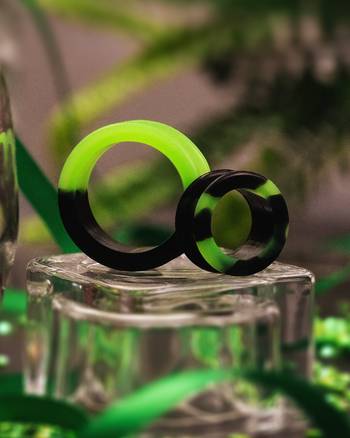

Neon Green & Black Marble Effect Silicone Ear Tunnel
from
£6.00
NEW


Clear & Black Glass Dead Stretching Kit
from
£15.99
NEW