GET SOCIAL WITH US
RECENT ARTICLES


Newsletter
Keep up-to-date with the latest promotions, news and releases!
Why Flat-Back Jewellery Is More Comfortable for Ear Stacks
Creating an ear stack is about more than choosing jewellery that looks good together. When several piercings are positioned across the same ear, comfort, jewellery fit and how individual pieces interact with each other become increasingly important.
Flat-back jewellery, particularly flat-back labret studs, has become a popular option for helix, conch, tragus and other suitable ear piercings. Instead of using a traditional butterfly fastening, the jewellery has a smooth, flat disc that sits against the back of the piercing.
For people building a curated ear or wearing multiple pieces of jewellery every day, this low-profile design can offer several practical advantages. From reducing bulky fastenings behind the ear to making closely positioned piercings easier to style, here is why flat-back jewellery can be particularly well suited to ear stacks.
What Is Flat-Back Jewellery?
Flat-back jewellery usually refers to a labret-style post with a flat disc permanently attached to one end. The decorative top attaches to the opposite end using either an internally threaded or threadless mechanism.
Unlike conventional earrings, there is no separate butterfly or scroll fastening behind the ear. Once fitted correctly, the flat disc sits relatively close to the skin.
Flat-back labrets are available in different gauges and post lengths, as well as a wide variety of decorative tops. This makes them suitable for creating everything from minimalist ear stacks to more elaborate combinations of gemstones, shapes and decorative designs.


Why Traditional Earring Backs Can Feel Bulky
Traditional butterfly backs extend behind the ear and include several raised edges and openings. When wearing a single lobe earring, this may not cause any noticeable problems, but multiple fastenings can become more obvious in a larger ear stack.
Closely positioned earrings may press against one another behind the ear. Traditional backs can also catch on hair or feel uncomfortable when pressure is applied to the side of the head.
A flat-back labret removes much of this additional structure. The smooth disc creates a lower-profile surface behind the piercing, which many people find easier to wear for extended periods.
Flat Backs Create a Lower-Profile Fit
One of the biggest advantages of flat-back jewellery is how closely it can sit against the ear when the post is correctly sized.
Instead of having a fastening protruding significantly from the back, the disc rests relatively flat against the tissue. This can make jewellery feel less intrusive, particularly in cartilage placements where space is limited.
A lower-profile fit can also help prevent different pieces within an ear stack from interfering with each other.
However, flat does not mean tight. The post still needs to provide enough wearable length for the tissue without compressing it.
Why Flat Backs Work Well for Multiple Piercings
As the number of piercings in an ear stack increases, the available space between pieces becomes more important.
Flat-back labrets allow several pieces to be positioned relatively close together without requiring bulky individual fastenings behind every decorative top.

This is particularly useful for stacked lobes, multiple helix piercings and combinations involving several cartilage placements.
The result can be a cleaner arrangement both visually and practically, with each piece having its own space rather than competing with large backs.
Flat-Back Jewellery Can Reduce Snagging
Hair catching around ear jewellery is a familiar problem for anyone with multiple piercings.
The shape of traditional earring backs can provide additional edges for hair to wrap around or become trapped. Clothing, towels and other materials can also catch on protruding jewellery.
The smooth disc of a flat-back labret reduces the number of raised components behind the ear. It cannot completely prevent snagging because the decorative front can still catch, but the simpler rear profile can make everyday wear easier.
Choosing smooth, appropriately sized decorative tops can further reduce potential snagging within an ear stack.
Are Flat Backs Better for Sleeping?
Flat-back jewellery is often considered more comfortable than protruding earring backs when pressure is placed against the ear because there is no pointed post extending beyond the fastening.
However, this does not mean you should deliberately sleep directly on a healing piercing. Constant pressure can still irritate cartilage and affect healing regardless of the jewellery style.
For fully healed piercings, a properly fitted flat back may feel less noticeable against a pillow than jewellery with a bulky fastening.

People with extensive ear stacks may also use piercing pillows with a central opening to keep pressure away from their jewellery.
Why Post Length Is Important
The comfort benefits of flat-back jewellery depend heavily on choosing the correct post length.
A post that is too long can move backwards and forwards, tilt and catch on surrounding objects. It may also cause the decorative top to sit away from the ear rather than forming part of a neat stack.
A post that is too short creates the opposite problem. The decorative end and flat disc can press into the tissue, potentially causing discomfort, irritation or embedding.
For healed piercings, properly fitted posts should sit securely without compressing the ear. A professional piercer can help determine the appropriate length for individual placements.
Flat Backs Can Make Ear Stacks Look More Balanced
Comfort is not the only reason flat-back jewellery works well for curated ears.
Because labret posts are available with many different decorative tops, they make it possible to create variation without changing the basic jewellery mechanism behind each piercing.
Small gemstones can be combined with larger statement pieces, while shapes such as stars, moons, spikes and clusters can be positioned to follow the natural contours of the ear.
Using lower-profile jewellery also helps prevent the ear stack from appearing unnecessarily crowded, particularly when several piercings are positioned close together.
Threadless Flat-Back Jewellery
Threadless flat-back jewellery uses tension rather than screw threads to hold the decorative end in place.
A small pin attached to the decorative top fits inside the hollow labret post. The pin is slightly bent before insertion, creating tension that holds the top securely.
One advantage of threadless jewellery for ear stacks is the ability to change decorative tops while retaining a suitable labret post, provided the components are compatible.
This can make it easier to update the appearance of an ear stack without replacing every part of the jewellery.


Internally Threaded Flat-Back Jewellery
Internally threaded labrets use a decorative top with an external threaded section that screws into the inside of the post.
Because the threading is inside the bar, the external surface of the post that passes through the piercing remains smooth.
Internally threaded jewellery is available with a wide variety of decorative attachments, making it another practical option for building coordinated ear stacks.
Whichever mechanism you choose, make sure the jewellery is manufactured accurately and the top is properly secured.


Which Ear Piercings Can Use Flat-Back Jewellery?
Flat-back labrets can be suitable for several common ear piercing placements, depending on anatomy and how the piercing was performed.
They are frequently worn in lobe, stacked lobe, helix, forward helix, conch and tragus piercings. Some other placements require curved barbells, rings or specialist jewellery instead.
For example, rook and daith piercings follow different anatomical paths and are generally suited to different jewellery shapes. Industrial piercings also require careful alignment and are commonly worn with a straight barbell connecting two piercing channels.
An ear stack should therefore be designed around the jewellery that is appropriate for each individual piercing rather than trying to use flat backs everywhere.

Flat Backs for Helix Piercings
Helix piercings are particularly popular within curated ear stacks because their position around the outer cartilage creates plenty of styling possibilities.
A flat-back labret can provide a compact alternative to a ring, particularly for people who want the jewellery to remain relatively stable.
Small gems and decorative tops can also be combined across multiple helix piercings without adding several large fastenings behind the ear.
Once a helix is fully healed, you may choose between a stud and suitable ring depending on your anatomy, jewellery preference and lifestyle.
Flat Backs for Conch Piercings

A conch piercing sits within the central bowl of the ear and can become a strong focal point within an ear stack.
Flat-back labrets allow decorative tops to sit inside this space without a ring extending around the outside of the ear.
Because conch jewellery can feature larger decorative tops and clusters, correct post length becomes especially important. The jewellery needs enough room to sit comfortably without excessive movement.
A well-chosen conch piece can act as the central design around which smaller jewellery is arranged.
Flat Backs for Tragus Piercings

The compact position of the tragus makes low-profile jewellery particularly useful.
Flat-back labrets are commonly used because the disc can sit inside the ear while the decorati
ve end remains visible externally.
However, people who regularly wear earbuds or in-ear headphones should consider how the backing interacts with them. Even flat jewellery may become uncomfortable if another object repeatedly presses against it.
The best jewellery choice should therefore take both anatomy and everyday habits into account.
Can You Use Flat-Back Jewellery in Healed Lobe Piercings?
Flat-back jewellery is not limited to cartilage piercings. It can also be worn in suitable healed lobe piercings.
This can be particularly useful when building stacked lobe arrangements with several piercings close together.
Replacing bulky butterfly backs with correctly fitted flat-back posts can create more space behind the ear and give the overall arrangement a cleaner profile.
As with cartilage jewellery, the gauge and post length need to be compatible with the existing piercing.
Material Still Matters
The shape of the jewellery is only one factor affecting comfort. Material quality is equally important.
Implant-grade titanium is a popular option for flat-back jewellery because it is lightweight, corrosion-resistant and suitable for many people with metal sensitivities.
High-quality jewellery should also have a smooth finish without rough surfaces, damaged coatings or sharp edges.
If you are investing in jewellery intended for regular wear as part of an ear stack, material, surface finish and construction are just as important as the decorative design.

Can You Mix Flat Backs and Rings in an Ear Stack?
An ear stack does not need to use one jewellery type exclusively.
Combining flat-back studs with rings can create contrast and prevent the overall arrangement from looking too uniform. For example, smaller flat-back pieces can provide detail across the ear while a ring creates a focal point in a healed helix or conch piercing.
The important consideration is that every piece fits its individual piercing correctly.
A successful ear stack should balance appearance with anatomy, movement and comfort rather than forcing every piercing into the same jewellery style.

Signs Your Flat-Back Jewellery Does Not Fit Properly
Flat-back jewellery should not feel tight simply because it is designed to sit close to the ear.
If the disc or decorative top begins pressing deeply into the tissue, the post may be too short. Persistent redness, tenderness or pressure marks can also indicate that the jewellery needs reassessing.
At the other extreme, a post that visibly moves backwards and forwards or repeatedly catches may be unnecessarily long.
If you are unsure about the fit of a labret, a professional piercer can measure the placement and recommend a more appropriate post length.
Final Thoughts
Flat-back jewellery has become a popular choice for ear stacks because it combines a low-profile design with a wide variety of decorative possibilities.
The smooth backing can reduce bulk behind the ear, while correctly fitted posts can help minimise unnecessary movement and snagging. Flat-back labrets are also available with interchangeable threadless or internally threaded tops, making them particularly versatile when building or updating a curated ear.
However, comfort still depends on correct sizing, appropriate material and individual anatomy. A flat back that is too short or too long can be just as uncomfortable as any other poorly fitted jewellery.
By selecting appropriate jewellery for each piercing rather than focusing solely on appearance, you can create an ear stack that is both visually balanced and comfortable for everyday wear.
BESTSELLERS


Black Silicone Ear Tunnel
from
£4.00


Black Stainless Steel Double Flared Tunnel
from
£7.00


Clear & Black Single Flare Glass Plug / Gauge
from
£5.00
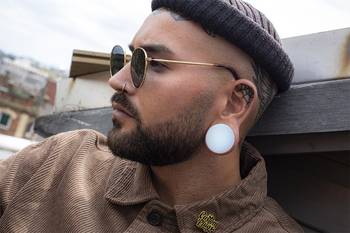

Opalite Glass Plug / Gauge
from
£7.00


Blue & Green Iridescent Glass Ear Tunnel
from
£11.00


Marble Black & Red Stone Plug / Gauge
from
£9.00


Amethyst Stone Tunnel
from
£10.00


Black Metal Dead Stretching Kit
from
£17.99
NEW
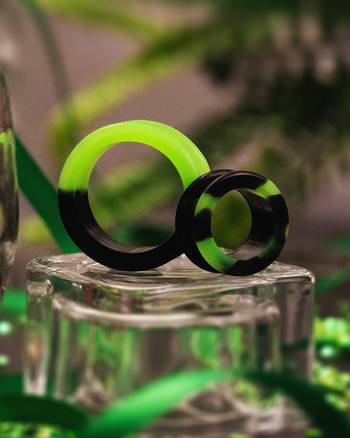

Neon Green & Black Marble Effect Silicone Ear Tunnel
from
£7.00
NEW


Clear & Black Glass Dead Stretching Kit
from
£16.99
NEW