GET SOCIAL WITH US
RECENT ARTICLES


Newsletter
Keep up-to-date with the latest promotions, news and releases!
Stud vs Ring for a Healed Cartilage Piercing

Once a cartilage piercing has fully healed, one of the most enjoyable stages is choosing new jewellery. For many people, the main decision is whether to wear a stud or change to a ring.
Both options can work well in a healed cartilage piercing, but they create different looks and behave differently in the ear. A stud usually sits close to the skin and offers a more secure, understated fit, while a ring follows the curve of the ear and creates a more visible, decorative effect.
The right choice depends on the position and angle of the piercing, the shape of your ear, your lifestyle and the type of jewellery you find most comfortable. Understanding the practical differences between cartilage studs and rings can help you choose ear piercing jewellery that looks good without creating unnecessary pressure or irritation.
What Counts as a Cartilage Piercing?
A cartilage piercing is positioned through the firmer tissue of the ear rather than the softer earlobe. Cartilage piercings include several different placements, each of which may suit a particular style of jewellery.
Common cartilage piercings include helix, forward helix, conch, tragus, rook, daith, snug and industrial piercings. Although these placements are grouped together as cartilage piercings, their anatomy and jewellery requirements can be very different.
A ring that works well in a healed helix may not be appropriate for a forward helix. Similarly, jewellery designed for a daith piercing will not necessarily suit a tragus or conch piercing.
For this reason, the decision between a stud and a ring should always consider the exact piercing placement rather than treating all cartilage piercings in the same way.
When Is a Cartilage Piercing Fully Healed?
Cartilage generally takes longer to heal than an earlobe piercing because the tissue has a more limited blood supply. Even when the outside appears calm, the internal piercing channel may still be developing.
A piercing should not be considered fully healed simply because it is no longer painful. A healed cartilage piercing should generally feel comfortable, show no persistent swelling or discharge and allow appropriately fitted jewellery to move without causing sharp pain.
Cartilage piercings can take many months to settle completely, and healing time varies according to placement, jewellery fit, aftercare, lifestyle and individual anatomy.
Changing to a ring too early can increase movement and place pressure on an immature piercing channel. Before making a significant jewellery change, particularly from a straight post to a curved ring, it is sensible to ask an experienced piercer to assess the piercing.
What Type of Stud Is Used in a Cartilage Piercing?

The term stud can refer to several jewellery styles, but flat-back labrets are among the most popular choices for cartilage piercings.
A flat-back labret has a straight post with a smooth, flat disc positioned behind the ear. The decorative end sits on the visible side of the piercing. Depending on the design, the decorative end may be internally threaded or threadless.
Flat-back jewellery is commonly preferred over traditional butterfly-back earrings because it sits more smoothly against the ear and is less likely to trap debris around a bulky fastening.
Straight barbells may also be used in some cartilage placements, while curved barbells are better suited to piercings such as the rook. The exact jewellery style should match the direction and anatomy of the piercing.
What Type of Ring Can Be Worn in Cartilage?

Several types of rings can be worn in suitable healed cartilage piercings.
Hinged clicker rings are popular because their opening mechanism makes them relatively easy to insert and close. Seam rings offer a smooth, minimalist appearance, while captive bead rings use a removable bead to hold the ring closed.
Some rings feature decorative fronts, chains, gems or shaped sections. These can create a striking look, but the decorative area must be positioned correctly so it does not rotate into the piercing channel or press against the ear.
The diameter and thickness of the ring are critical. A ring that is too small can compress the tissue, while one that is unnecessarily large may move excessively or catch on hair and clothing.
Which Is More Comfortable: A Stud or a Ring?
For everyday wear, a correctly fitted flat-back stud is often the more stable option. It remains relatively still and does not rotate through the piercing channel as much as a ring.
A well-fitted stud can be particularly comfortable for people with long hair, those who regularly use headphones or anyone concerned about jewellery catching on clothing.
However, the post must be the correct length. A post that is too short can create pressure, while one that is too long can tilt, snag and move excessively.
A ring may feel comfortable once the piercing is fully mature and the ring has the correct diameter. However, rings naturally move and rotate more than studs. Some people enjoy this freedom of movement, while others find it causes irritation.
Comfort therefore depends less on whether the jewellery is technically a stud or ring and more on whether its shape, dimensions and placement suit the individual ear.
The Importance of Ring Diameter
Ring diameter affects both the appearance and comfort of cartilage jewellery. It determines how closely the ring follows the edge of the ear and how much space remains between the jewellery and the skin.
A small ring can create a close-fitting appearance, but it must not pull on the piercing or press into the cartilage. Jewellery that looks attractively snug may still be too tight if it changes the natural angle of the piercing.
A larger ring provides more space but can move more freely and may catch more easily. The ideal diameter depends on the distance between the piercing channel and the edge of the ear, as well as the thickness and shape of the cartilage.
Two people with the same piercing placement may require different ring diameters because ear anatomy is highly individual.
The Importance of Stud Post Length
Studs also require accurate sizing. The wearable length of a labret is the section of the post that passes through the ear.
If the post is too short, the decorative end and flat back may press into the tissue. This can cause discomfort and leave little room for minor changes in the ear caused by heat, pressure or temporary swelling.
If the post is too long, the jewellery may lean forwards, catch on objects and move backwards and forwards through the piercing.
A professional piercer can measure the tissue and recommend a post length that sits securely while leaving enough space for comfort.
Can You Switch Between a Stud and a Ring?
Once the cartilage piercing is fully healed and stable, it may be possible to switch between a stud and a ring.
However, the piercing channel may feel different after wearing one jewellery shape for a long period. A straight post and curved ring place pressure on different parts of the channel.
A ring should slide into a healed piercing without force. If insertion feels painful or there is significant resistance, stop rather than pushing the jewellery through.
Repeatedly changing cartilage jewellery can also cause irritation, especially if the jewellery is handled roughly or changed without clean hands and suitable equipment.
Signs That Your Jewellery Does Not Fit Correctly
A healed piercing should not remain persistently painful simply because the jewellery has been changed.
Warning signs of unsuitable fit can include ongoing tenderness, redness, swelling, pressure marks, repeated crusting or jewellery that visibly pulls the ear out of its natural position.
A stud that begins to sink into the tissue may be too short. A ring that leaves a deep indentation or draws the cartilage inwards may be too small.
Jewellery that repeatedly catches or moves excessively may be too long or too large. Rather than waiting for the problem to resolve on its own, ask a professional piercer to assess the fit.
Stud or Ring: Which Is Better for Everyday Wear?
For many people, a fitted flat-back stud is the most practical choice for everyday wear. It offers stability, a low profile and a wide range of decorative options.
A ring may be preferred by those who enjoy a more visible look and whose piercing anatomy comfortably supports circular jewellery.
Neither option is universally better. A secure, correctly sized ring can be more comfortable than a badly fitted stud, just as a properly fitted stud can be more practical than an oversized hoop.
The best everyday jewellery is the piece that suits your anatomy, remains comfortable during your normal routine and does not place unnecessary pressure on the piercing.
Final Thoughts
Choosing between a stud and a ring for a healed cartilage piercing involves more than deciding which style looks best. Jewellery shape affects movement, pressure, security and how the piece interacts with your ear throughout the day.
Studs, particularly flat-back labrets, tend to offer greater stability and a lower-profile fit. Rings create a more visible silhouette and can work beautifully in suitable helix, conch and other cartilage placements.
Whichever style you prefer, correct sizing and high-quality materials are essential. The ear piercing jewellery should follow the anatomy of your ear rather than pulling, compressing or distorting the piercing.
When you are uncertain about the jewellery diameter, post length or suitability of a ring, an experienced professional piercer can assess the placement and help you select an option that balances appearance with long-term comfort.
BESTSELLERS

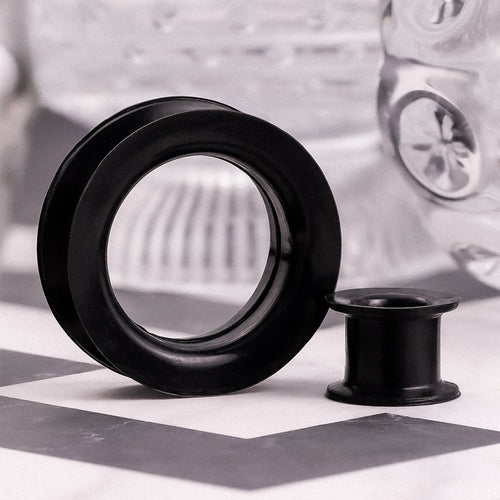
Black Silicone Ear Tunnel
from
£3.00
-v1657710003014.jpg?512x640&transform=resize=350)
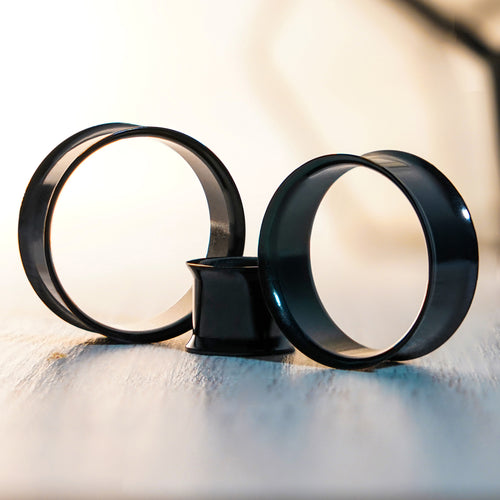
Black Stainless Steel Double Flared Tunnel
from
£7.00
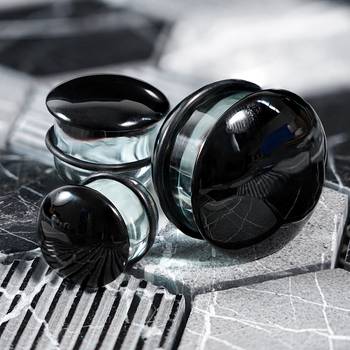
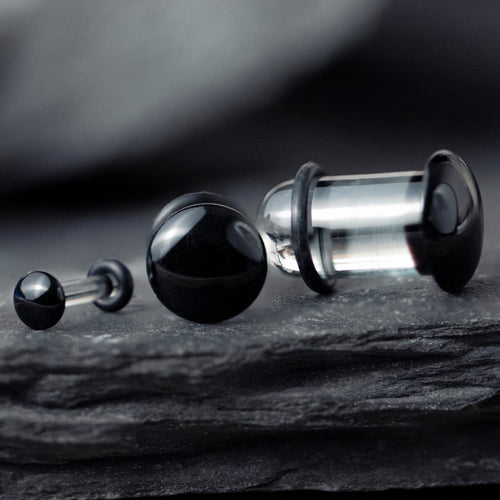
Clear & Black Single Flare Glass Plug / Gauge
from
£5.00
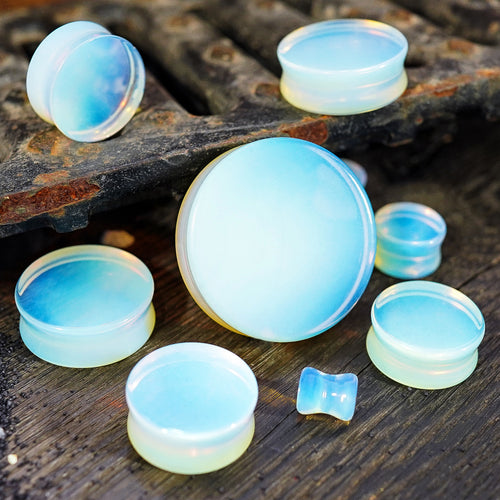
Opalite Glass Plug / Gauge
from
£6.00

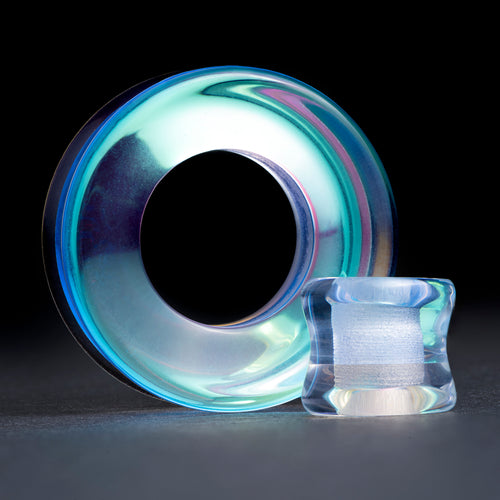
Blue & Green Iridescent Glass Ear Tunnel
from
£11.00

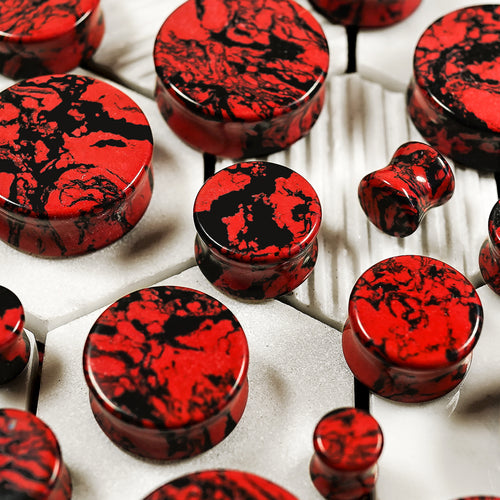
Marble Black & Red Stone Plug / Gauge
from
£9.00

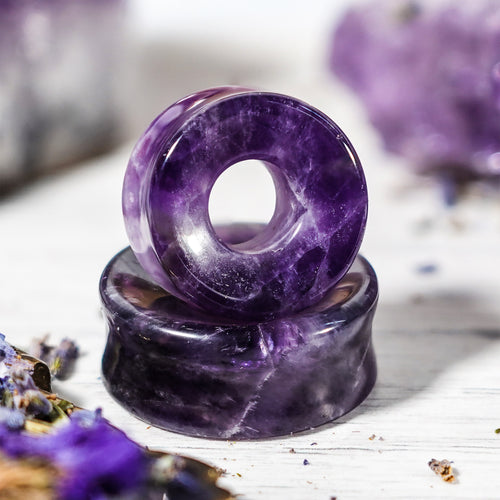
Amethyst Stone Tunnel
from
£8.00
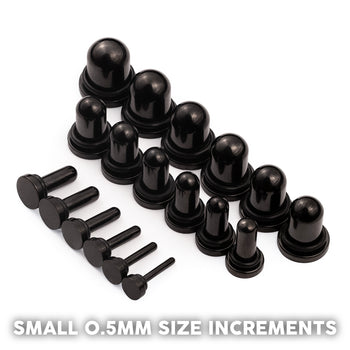
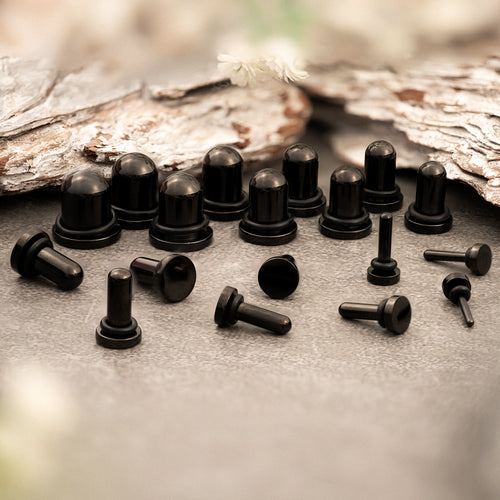
Black Metal Dead Stretching Kit
from
£15.99
NEW
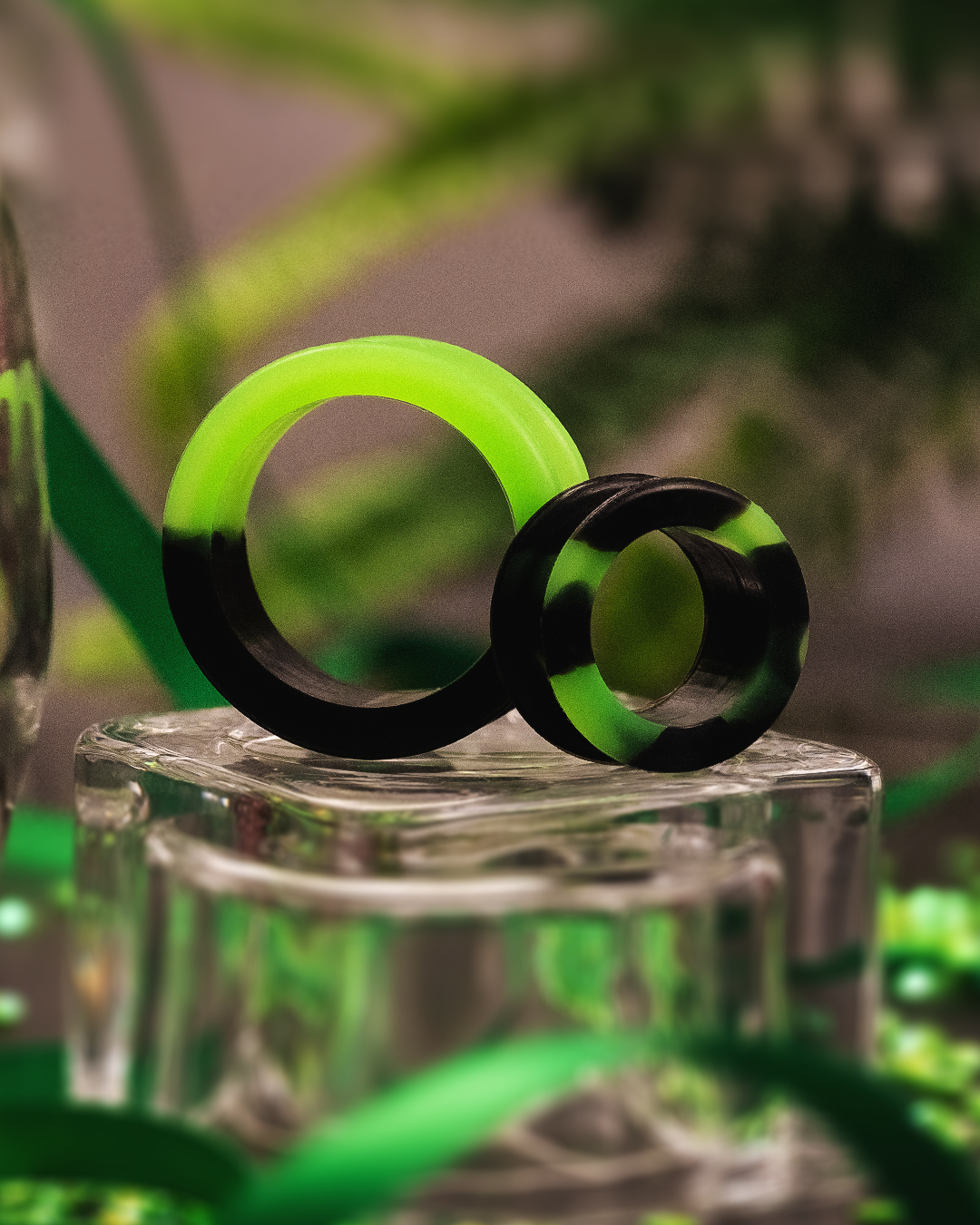
Neon Green & Black Marble Effect Silicone Ear Tunnel
from
£6.00
NEW


Clear & Black Glass Dead Stretching Kit
from
£15.99
NEW