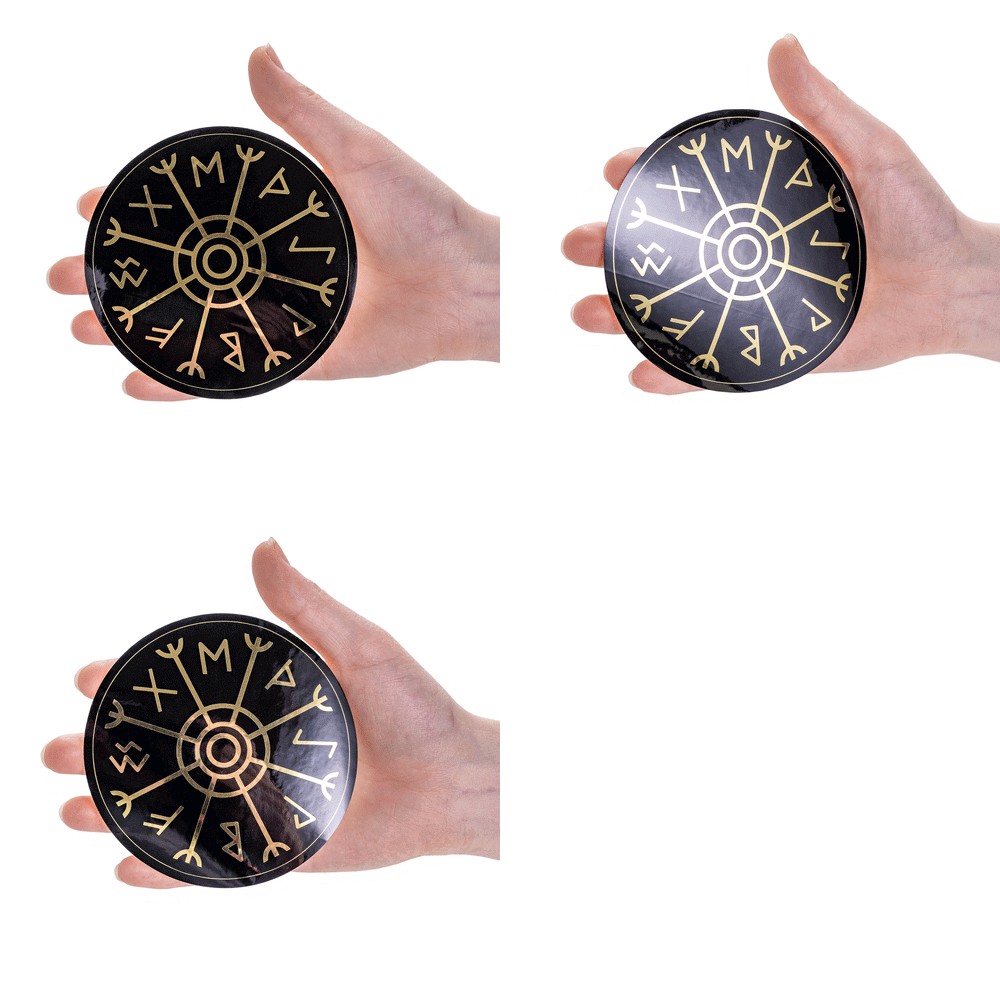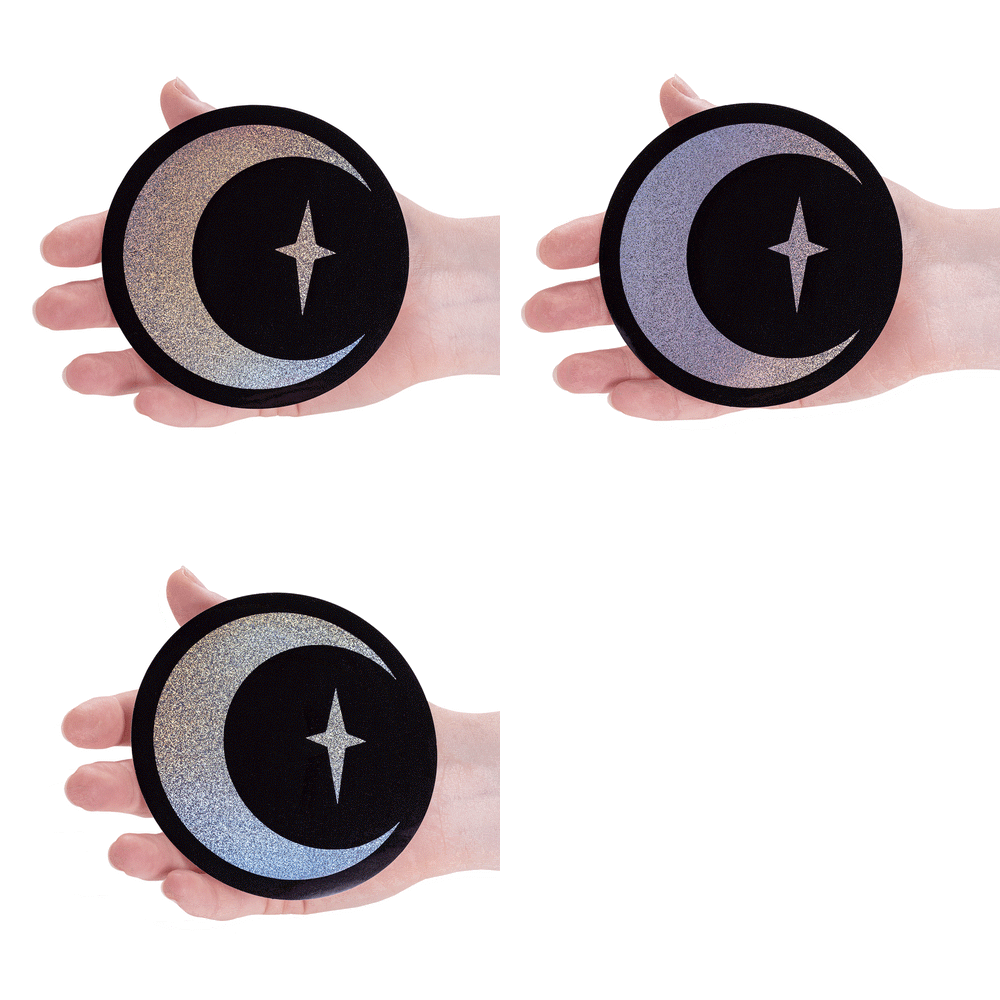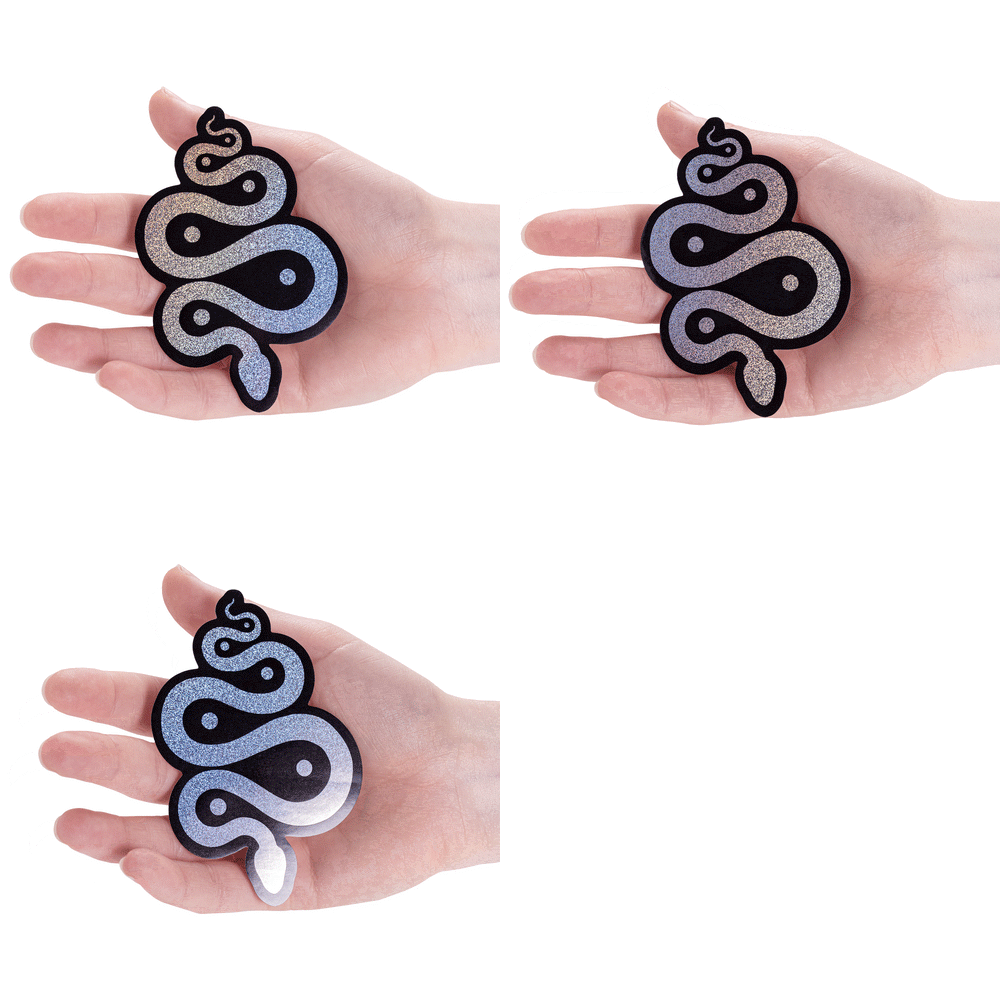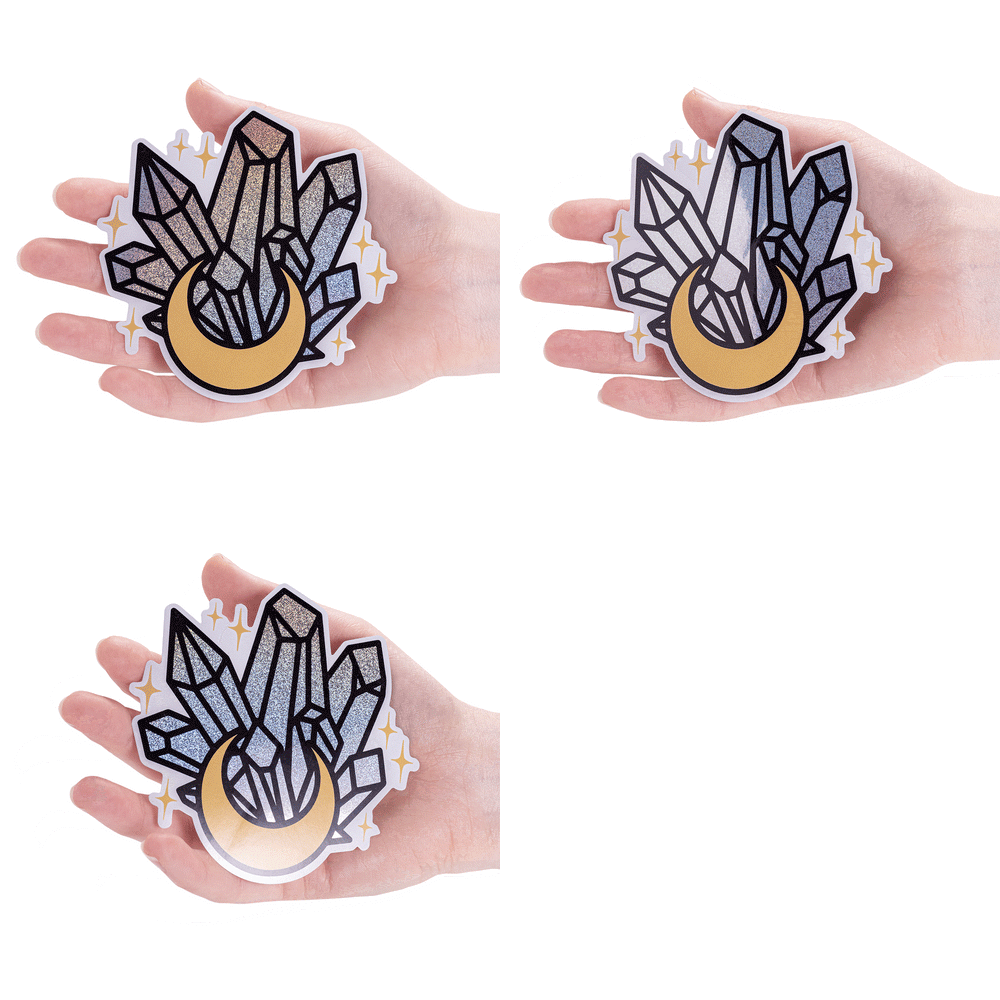

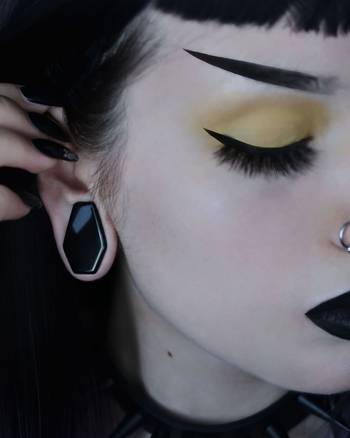
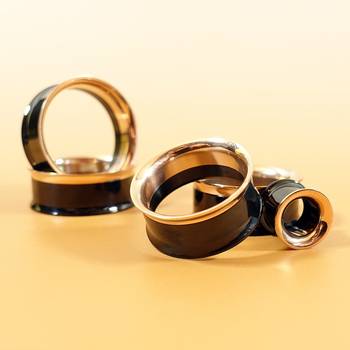
Tunnel d'oreille en silicone noir
de
£3.00








-v1657710003014.jpg?512x640&transform=resize=350&format=webp)











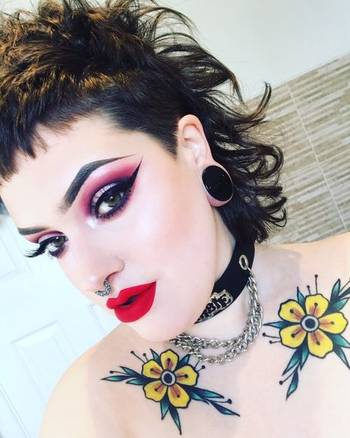

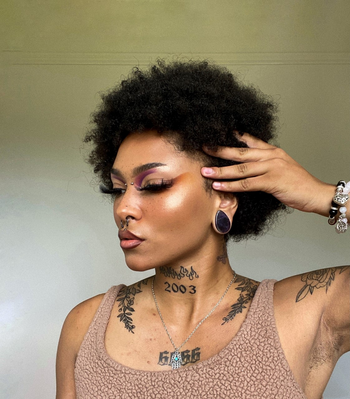

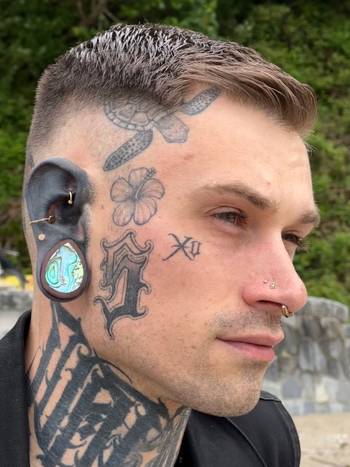



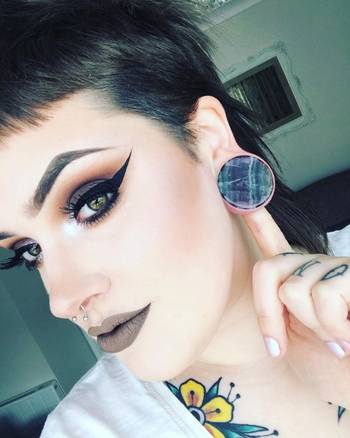





-Photographer-@domdirekt-for-@tenforfifty-v1674724276532.jpg?2400x3000&transform=resize=350&format=webp)





-copy-v1674726508930.jpg?2316x3088&transform=resize=350&format=webp)


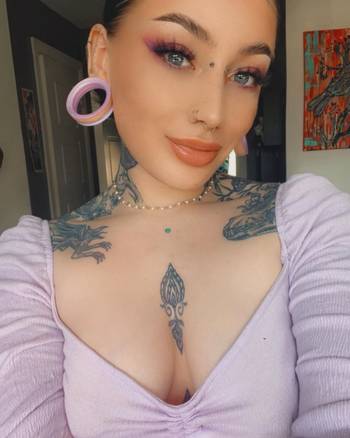

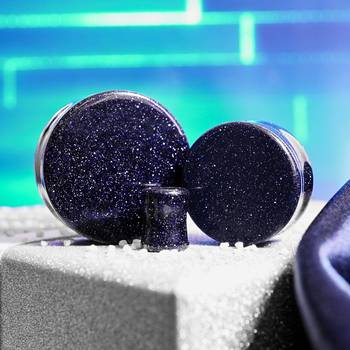





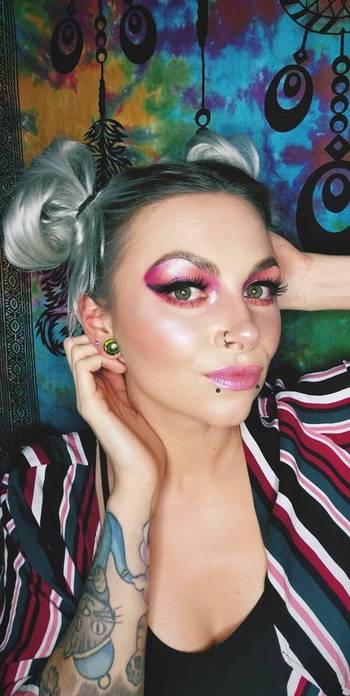

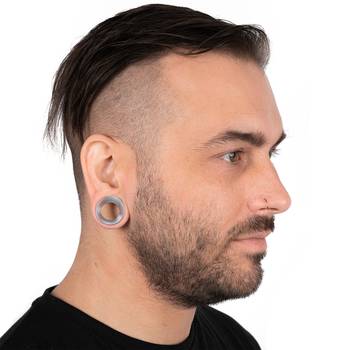



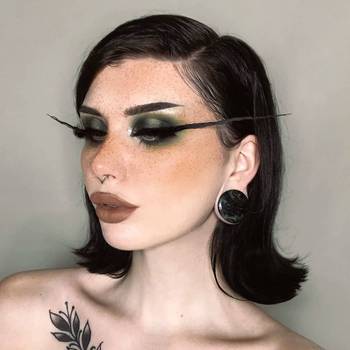




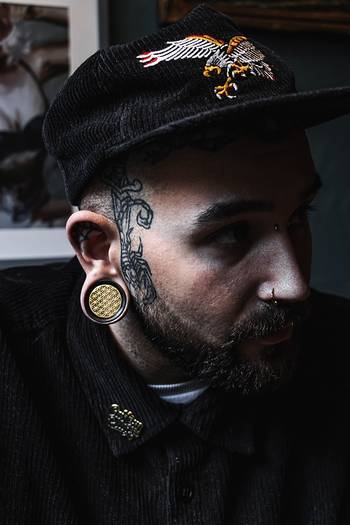

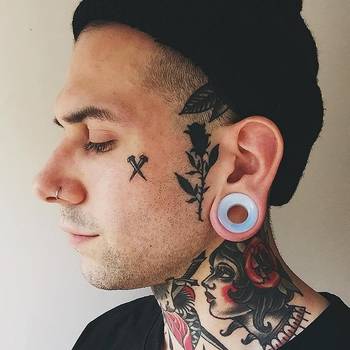



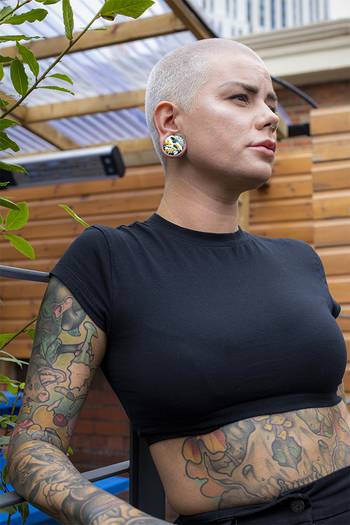






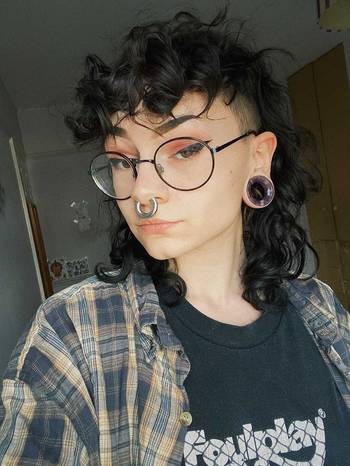

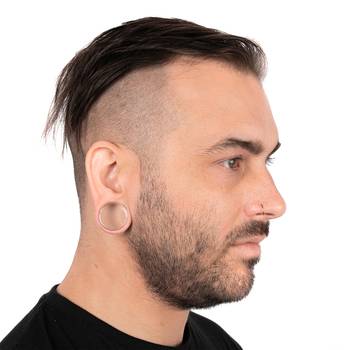

Contrary to popular belief, ear gauges aren’t new. In 1991, tourists from Germany stumbled upon a mummy that was later nicknamed Otiz—the oldest known example of mummification in the world. Otiz is a perfectly preserved example of just how long body modifications such as ear stretching have been around as he came from around 3300 BCE and has ears stretched to about 8 millimeters!
Thankfully since then, mankind has developed safer and cleaner ways of stretching ears.
En commençant généralement avec des écarteurs d'oreille de 16 ou 14, les oreilles sont étirées à l'aide d'un taper spécialement développé, inséré dans un piercing d'oreille cicatrisé. Environ six semaines après chaque étirement, il est possible d'étirer à nouveau en toute sécurité. Le Stretching des oreilles, effectué lentement et dans un environnement propre, est la meilleure façon d'assurer la santé des lobes.
When stretching your ears, it can be hard to find stylish cheap ear gauges, plugs, and tapers of every size, which is why we are here with you every step of the way with safe and genuine jewellery that fits your needs perfectly.
As a leading shop in the world of ear gauges, and custom-made plugs for ears come in a variety of materials and sizes for all stages of stretching.
We also sell fake gauges if you want to see if stretching your ears is for you before committing. We offer a variety of custom-made types and styles.
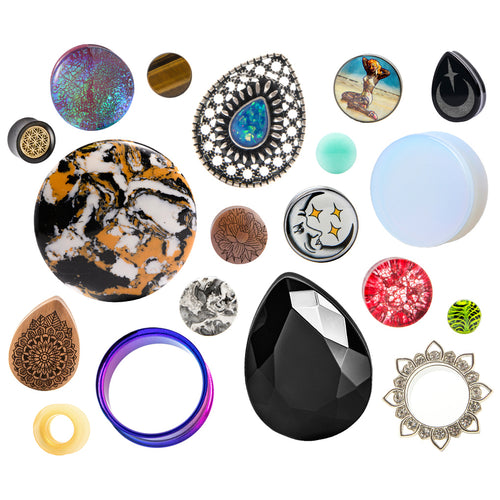
Our plug sizes include the following: 16g, 14g, 12g, 10g, 8g, 6g, 4g, 2g, 1g, 0g, 00g, 7/16", 1/2", 9/16", 5/8", 3/4", 7/8", 1", 28mm, 29mm, 30mm, 32mm, 34mm, 36mm, 38mm, 40mm, 42mm, 44mm, 46mm, 47mm, 48mm, 50mm, 0 gauge plugs, and 2 gauge plugs. All of our plugs are made safe for your ears from materials such as silicon, wood, glass, metal and stone.
Some of the other jewelry we offer for plugs for ears and stretching includes:
The terms “gauges” and plugs are very often used interchangeably to describe ornamental jewellery for stretched ears. Technically, the term “gauge” refers to the size to which the ear has been stretched. It can also refer to the size of the plug based on width.
Knowing your gauge size is important when stretching up and changing jewellery. If you buy plugs that are too small in gauge, they will not fit your ears, and if you buy plugs too large, you can risk a blowout (tearing of the stretched skin). The term “plug” simply refers to the jewellery of any gauge that is used for ear stretching. They can be of many different gauges and are unlimited in style.
Questions about our Ear Gauges? Let us know! Contact us today with any questions about our ear gauges or plugs and we'll get back to you within a day or two.
 Jordan Smith
Excellent service fourni
J'ai commandé récemment et je me suis trompé de taille pour les plugs dont j'avais besoin. Carmelo était l'agent du service client qui m'a contacté au départ au sujet de ma commande, et celui qui m'a accompagné tout du long pour obtenir un échange. Sa réactivité et sa façon de gérer les problèmes sur ma commande (qui étaient de ma faute) ont été idéales et incroyablement appréciées. Un exemple de super employé.
 Jack Mckay
Je commande chez Custom Plugs de temps en temps
Mais chaque commande que j'ai passée a été absolument hors du commun. Une large gamme de designs, de formes et de matériaux, et ils sont tous fantastiques ! Mon adresse de référence pour les plugs !
 Sylvea Ortiz
Mon endroit préféré pour commander des gauges !
Expédition rapide, livraison rapide & des produits géniaux. J'adore ces gens !!
 Sarah Hill
Incroyable !
Super impressionné par la qualité des tunnels, j'ai passé 3 commandes cette semaine ! J'ai hâte de faire mes prochains achats ! Livraison vraiment rapide, en plus ! 11/10 !!!
 Becky Ganderton
Qualité fantastique
Je vais toujours chez Custom Plugs, leurs plugs, tunnels et tapers sont durables, confortables, originaux et d'une qualité fantastique ! Des autocollants gratuits avec votre commande, une expédition standard rapide et un bon emballage, je soutiendrai toujours cette entreprise pour le travail qu'elle met dans ses produits
 Michael Lawrence
Encore un avis 5 étoiles
Je suis sûr d'avoir déjà laissé un autre avis 5 étoiles à un moment donné, mais ils en méritent un autre. La livraison est toujours rapide, les produits toujours super et le service client est le meilleur, j'ai reçu un nouveau bon cadeau, en plus des nombreux plugs gratuits, du pin's VIP et des autres bons cadeaux. À ce stade, je crois que j'ai reçu plus de cadeaux gratuits pour ma fidélité que je n'ai dépensé chez eux !
 Sam Graham
Vraiment content d'avoir découvert custom plugs cette année. Des produits de belle qualité et un super service client. Ils proposent aussi d'autres bijoux et là encore je n'ai rien à redire. Logique qu'ils existent depuis 2011 !! 10/10 vous avez un client fidèle
 Matthew Wilson
Acheter maintenant
Une expérience rapide, abordable et géniale sur toute la ligne, une équipe incroyable et des options de plugs géniales
 Sabrina Jonkmans
La meilleure entreprise pour les Plugs, Tunnels et le service client !
Je ne pourrais jamais dire assez de bien de Custom Plugs ! Leurs produits sont géniaux et les prix raisonnables ! Leur service client est sans égal. Après quelques soucis et des e-mails échangés, je suis très satisfait et je me sens bien pris en charge ! Je tiens à féliciter tout particulièrement Carmie, un mec super sympa, il a été compréhensif et extrêmement réactif ! Je recommande vivement Custom Plugs à tout le monde ! X
 Tom Perkins
Entreprise fantastique, super produits et une équipe formidable ! Carmie a été absolument génial !
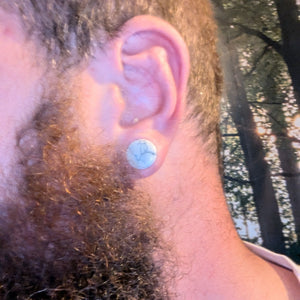 Carl Whittaker
Super. Réponse rapide et aucun tracas en cas de problème. Des plugs confortables et bien conçus
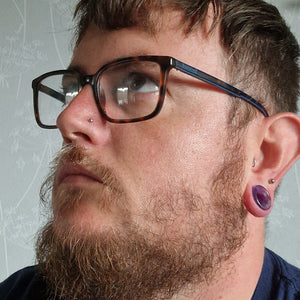 Matt Wileman-Ashby
Le seul endroit où aller
Des plugs toujours géniaux et un excellent service client
 Rachel Byron
Les meilleurs sur mesure
C'est un site auquel vous pouvez faire confiance, avec tellement de choix de produits, qui vous permet d'adapter ces piercings à ce qui vous correspond, puis livré à votre porte en peu de temps.
 Tawnia M Wood
Le service client, les prix et la qualité sont excellents
Les prix et la qualité sont excellents, le service client est génial, ils répondent vite et j'ai confiance : quand je commande quelque chose comme de l'améthyste, c'est bien ce que je reçois. Certaines boutiques essaient de vendre du verre teinté ou un autre matériau comme un véritable cristal/pierre, mais pas cette entreprise. J'ai récemment fait tomber un plug que je VENAIS de recevoir d'une hauteur d'environ 6 pouces et il s'est cassé, mais ils remplacent la paire. L'expédition est plus longue pour moi étant aux États-Unis, mais c'est à prévoir. Merci Carmie pour ton service client génial !
 Tyler Lange
J'aimerais pouvoir mettre 6 étoiles
Le site donne d'excellents conseils à ceux qui débutent et ne savent pas par où commencer en matière d'étirement d'oreille, et le service client est fantastique. Mon kit de tapers a été expédié plus vite que prévu, et quand j'ai écrit pour leur signaler qu'ils m'avaient envoyé le mauvais matériau par erreur, Carmie m'a répondu par e-mail et s'est occupé de tout en moins de 12 heures. J'ai eu des plugs de remplacement en quelques jours. J'ai hâte de refaire mes achats, je les ai recommandés à tous mes amis !
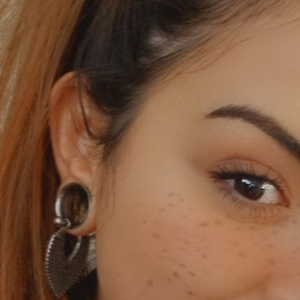 Abbie Hills
Ce qu'il y a de mieux !
Toujours mon adresse de référence pour acheter des bijoux d'oreille, tous les produits que j'ai achetés au fil des ans ont été d'une qualité incroyable, confortables à porter et tellement beaux, les gens font toujours des remarques sur mes plugs/tunnels d'oreille. J'adore custom plugs, ce qu'il y a de mieux.
 Dionne Jenkins
J'ai commandé plusieurs fois chez custom plugs et ce sera mon adresse de référence pour mes plugs et tunnels, une qualité incroyable et des tailles fidèles
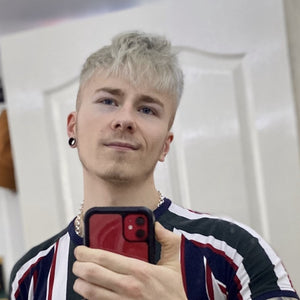 James Shaw
J'achète chez eux depuis des années, livraison rapide, super qualité, ils glissent même des cadeaux gratuits . 10/10
 Grace Chapman
Super produits, expédition vraiment rapide. Je n'ai jamais utilisé autre chose que custom plugs pour étirer mes oreilles et je n'ai jamais eu le moindre problème !
 Ross Davies
Je n'ai jamais eu autre chose qu'un service merveilleux avec UKCP ! Tout le monde dans cette entreprise est fantastique et vous donne vraiment l'impression d'être un client précieux. C'est pour ça que je reviendrai toujours 💙
 Ellie Savage
J'ai toujours absolument adoré ces gens. Je ne prends jamais mes plugs/tunnels ailleurs. Génial comme toujours 💪🏼
 Fraser Izzard-Crew
J'achète des plugs chez eux depuis un an maintenant
le meilleur service client qu'on m'ait jamais offert, même quand l'un de mes plugs n'était pas compatible avec mon oreille, ils l'ont tout simplement remplacé ! C'est génial, non ! Je reviendrai encore et encore !
 Victoria Mansfield
Excellent service client de la part de Carmie
Je suis un acheteur compulsif qui ne réfléchit pas avant d'acheter, j'ai donc eu besoin d'annuler une commande et d'en modifier une autre. Carmie s'est montré compréhensif et a tout arrangé pour moi !
 Jane Smith
J'ai acheté des plugs dans beaucoup d'endroits, ceux-ci sont d'une qualité égale voire supérieure à celle des autres boutiques et proposent aussi une super personnalisation que je n'ai vue nulle part ailleurs
 Chris Harvey
Plugs de haute qualité incroyables, très bon prix et livraison rapide
J'ai acheté de nouveaux plugs pendant leur promotion de plugs gratuits. Non seulement les plugs que j'avais commandés à l'origine étaient absolument magnifiques, mais les plugs gratuits et les plugs surprise que j'ai reçus étaient tous superbes et d'excellente qualité. Je ne pense pas que je commanderai un jour mes plugs ailleurs
 Sophia Pinnock
Honnêtement, rien à redire sur Custom Plugs
livraison rapide, et de beaux bijoux qui rendent mes oreilles jolies, j'ai tellement de plugs et je ne cesse d'enrichir ma collection
 Abbey Cram
Le meilleur cadeau !
J'ai commandé des plugs personnalisés en cadeau pour quelqu'un, le prénom de son fils est gravé dessus et je ne pourrais pas être plus satisfait du résultat. Je n'ai jamais fait autant confiance à une entreprise qu'à custom plugs et j'ai tellement hâte de voir sa tête quand elle les ouvrira !
 Ander Mendia
ma boutique de référence pour les oreilles étirées !
Cette boutique est devenue mon adresse de référence pour les plugs et les tunnels / les bijoux pour oreilles étirées. Je suis débutant et j'ai commandé un kit d'étirement que je n'ai pas aimé une fois reçu, et le processus d'échange a été rendu super facile avec Carmie et l'équipe. En plus, la commande de remplacement était des double évasé, un bijou qui ne correspondait pas à mon goût une fois en main, et là encore l'échange pour les plugs simple évasé que je voulais a été super fluide et rapide, j'ai mon remplacement/ma commande finale en main et la qualité est parfaite. Un emballage original et soigné, en plus ! J'adore cette boutique !
 Marc Gaul
Expérience incroyable avec cette entreprise
J'ai commandé des custom plugs et ils n'étaient pas tout à fait comme il faut, mais grâce à l'excellent service client d'Ella et de Carmie, j'ai fini par obtenir la paire de plugs parfaite ! Ils se sont surpassés pour m'aider ! Je recommande donc très, très vivement et je rachèterai assurément des plugs chez eux à l'avenir.
 Cameron Redfearn
Plugs de qualité fantastique
Des plugs de qualité fantastique,
Je n'achète plus mes plugs qu'ici
Une qualité imbattable !
 Chioma Opara
Ils offrent toujours un service client chaleureux, serviable et aimable. Leurs articles sont de bonne qualité. Carmie m'a aussi donné d'excellents conseils pour savoir si des plugs en acier chirurgical conviendraient à ma peau sensible. Non seulement ils étaient beaux et non irritants, mais ils ont été expédiés très rapidement ! Ils sont arrivés à temps pour une soirée de Noël. C'est pour ça que je reviens toujours chez Custom Plugs. Vous êtes tous formidables et proposez des articles de qualité. Merci beaucoup
 Jordan McCrindle
J'ai arrêté d'acheter dans ma boutique habituelle pour Custom Plugs…
J'achetais mes plugs sur Amazon jusqu'à ce que je voie ce site, custom plugs a une sélection incroyable de plugs, tunnels, poids d'oreille et bien plus encore, ils ont même la meilleure gamme de tailles que j'aie vue par rapport aux autres boutiques, c'était tellement difficile de trouver du 26mm ou plus grand ailleurs, mais maintenant j'achète de nouveaux plugs/tunnels d'oreille presque chaque semaine ! Leur site est super simple à utiliser et on trouve ce qu'on cherche en quelques secondes et l'expédition est tellement rapide ! 1000000/10 je recommande custom plugs à tout le monde !
 Stephan Kyriacou
Non seulement cette entreprise fabrique des bijoux absolument magnifiques, mais son service client est exceptionnel. J'avais besoin d'échanger une commande qui n'était pas tout à fait ce que je voulais et Carmie a été incroyablement serviable et généreux en m'aidant. Les réponses ont été rapides et aimables, et le plug que j'ai reçu en échange de celui dont je ne voulais pas est magnifique. Je recommande assurément Custom Plugs, surtout pour les faux plugs que j'utilise, car ils sont de super qualité, très abordables, et les options de couleurs sont superbes.
 Cellan Wright
Des plugs de qualité supérieure
J'achèterai toujours ici, et je le fais depuis des années. La qualité de la pierre/du verre est sans égale, je n'ai jamais eu le moindre problème. J'ai reçu un bon gratuit de £20 une fois et un badge pin's de client VIP une autre fois, ce que j'apprécie vraiment. Leur service client est toujours tellement serviable et poli chaque fois que j'ai eu des problèmes. Je ne recommanderai jamais assez ☺️
 Cayden Nel
J'adore la qualité de ces produits et…
j'adore la qualité de ces produits et ils arrivent généralement assez vite. Je n'ai pas encore eu de mauvaise commande chez custom plugs et j'ai commandé plusieurs fois maintenant !
 Libby Shotter
Produits de grande qualité
et un site facile à utiliser :)
 Lewis Hunt
La meilleure entreprise auprès de laquelle j'ai acheté des plugs, assurément une entreprise 10/10. Je recommanderai toujours, la livraison est rapide et les plugs sont confortables, on ne peut pas faire mieux
 Amber-Rose Geldard
Ma boutique de référence pour les plugs !
Livraison rapide et des pièces de bonne qualité !!! J'achète toujours ici et je n'ai jamais eu de problème 💕
 Jack Bingham
Délais d'envoi rapides
Très bon service, j'ai commandé plusieurs fois maintenant et je viendrai toujours ici pour les bijoux de corps
 Liam Regan
Des plugs de super qualité, bien emballés, une livraison rapide, des prix très intéressants et un rendu magnifique. Lors d'une rare occasion où j'ai voulu échanger un plug, l'équipe d'UK Custom Plugs s'est surpassée pour rendre le processus facile et rapide. Le service client a été exceptionnel. UK Custom Plugs est mon adresse de référence pour les plugs et les tunnels.
 Jada-Paige Jennings
Toujours une belle qualité, j'adore j'adore j'adore ♡
 Kaine Robinson
Entreprise absolument fantastique ! J'ai acheté pas mal de plugs/tunnels/poids/barres de piercing chez eux au fil des ans et je ne pourrais pas les recommander davantage ! J'ai aussi acheté des autocollants et des bonnets chez eux par le passé. Tout est arrivé rapidement dans un emballage génial et j'ai toujours reçu des produits de grande qualité !
 Mary Melchior
Ils ont des produits vraiment incroyables
...et leur service client est parfait 😁
 Samm Sanders
ÉPIQUE
Livraison rapide, le produit est magnifique et de très bonne qualité. Il s'ajuste vraiment bien et il est confortable !! En plus, j'ai reçu une très jolie paire de plugs et un autocollant gratuits avec mon achat, donc je suis vraiment content du service et des produits !! Merci d'être géniaux.
 Celia Graham
Super plugs et super prix
Vraiment content de la qualité des plugs en verre que j'ai achetés chez Custom Plugs. Et vraiment content d'avoir trouvé la taille 7mm ! Magnifiquement emballés et très bonne communication de leur part, très heureux de les avoir trouvés pour mes futurs achats.
 Gabriel Callahan
Ces plugs sont les plugs de meilleure qualité qui soient. Et impossible de battre ce rapport qualité-prix.
 Laura Deaton
Avis honnête !!
La meilleure qualité et le meilleur service. Je n'irai nulle part ailleurs pour mes plugs ! J'ai passé une nouvelle commande il y a 2 jours et je l'ai reçue aujourd'hui avec des plugs gratuits parce qu'ils ont remarqué que j'avais commandé chez eux plusieurs fois, je ne recommanderai jamais assez cette entreprise ! La qualité de leurs produits est exceptionnelle et ils prennent soin de leurs clients
 Veronique Visscher
Boutique géniale
Expédition rapide et des plugs de super qualité !
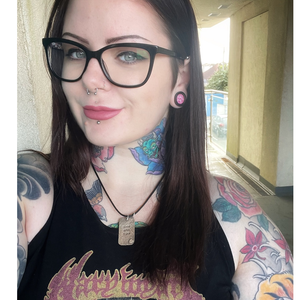 Lauren Phillips
Tous les articles sont de haute qualité, bien emballés, et la livraison est rapide.
Très bonne communication de la part de l'équipe lorsque j'ai voulu faire un échange, qui s'est déroulé facilement. Impossible de trouver un meilleur service client ou de meilleurs articles. Une sélection tellement large, et je rachèterai chez Custom Plugs encore et encore. Ils proposent aussi souvent des offres exceptionnelles.
 Samantha Ferrins
Boutique absolument incroyable !
« Boutique absolument incroyable. Livraison rapide et service client impeccable. J'ai trouvé que certains de leurs plugs double évasé étaient un peu trop grands pour que je les mette, et ils ont été ravis de m'aider à trouver des plugs qui me conviennent parfaitement ! Vivement recommandé !! »
 Jacob Banda
Un service client vraiment haut de gamme à chaque transaction, et des produits de très grande qualité sur chaque article
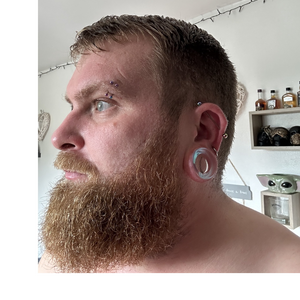 Daniel Woodfine
Excellent service client et des plugs de grande qualité. Je ne les recommanderai jamais assez
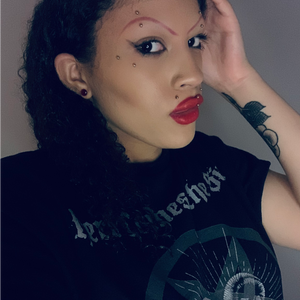 Adriana Robinson
Expédition rapide, content de mes plugs simple évasé 3mm :)
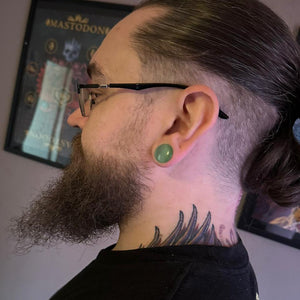 Aaron Potton
L'entreprise numéro 1 pour obtenir une paire de plugs parfaite.
La qualité est exceptionnelle, le service client est parfait et ils récompensent les clients fidèles. J'ai maintenant une dizaine de paires achetées chez eux et ils ont vu mon nom réapparaître et ont glissé une carte cadeau de £20 pour ma fidélité en tant que client régulier. Super entreprise !
 Johnathan Allt
Une qualité absolument super et des produits tellement géniaux, même le délai de livraison est rapide
 Chad Rice
Service client génial, ne déçoit pas.. <3
 Vicki Carter
Choix incroyable de plugs
J'achète chez custom plugs depuis des années maintenant et j'ai toujours adoré leur choix de plugs, ils sont géniaux et bien conçus, je saisis toujours chaque occasion de me procurer des plugs en édition limitée ! Super service client et une équipe adorable !
 Dan Smith
Très impressionné
J'ai acheté des tunnels et des plugs ici par le passé (et chez bien d'autres détaillants), Custom Plugs est sans conteste mon préféré, au-delà de la grande qualité des bijoux (et je viens de profiter d'une offre 2 pour 1 sur ma dernière commande, je crois même que j'aime la paire surprise gratuite plus que celles que j'ai commandées), toute l'expérience est amusante, emballage soigné, autocollants, même l'enveloppe est illustrée. Je ne suis pas du genre à écrire des avis d'habitude mais celui-ci mérite quelques mots sympas. Merci !
 Zoe Harris
Ils ont toujours les articles les plus mignons !
Récemment, l'un de mes plugs s'est cassé mais Carmie m'a aidé à obtenir un remplacement très rapidement, et a été super patient même quand je me suis rendu compte que j'avais mal communiqué quelque chose !
 Lee-Ann Redbourne
J'adore cette boutique !!
J'ai acheté des bijoux deux fois chez Custom Plugs et j'en rachèterai assurément. J'adore absolument les plugs gratuits que j'ai reçus, ce sont des choses que j'aurais choisies moi-même. Ils ont tous été de bonne qualité et offrent un rapport qualité-prix fantastique. La livraison a été super rapide et est arrivée dans un emballage vraiment cool et original. Merci pour les jolis bijoux et le service ❤️😊
 Drew Dearden
Je n'ai que du positif à dire sur UK Custom Plugs ! Ils ont une gamme fantastique de bijoux de corps et expédient vos commandes super rapidement. Le service client dont j'ai bénéficié de la part de Carmie a été exceptionnel et rien n'était un problème ! Je recommande vivement de commander chez UK Custom Plugs
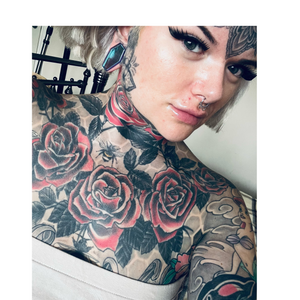 Rosie Dahle
Super content de mes nouveaux plugs !
Je n'irais nulle part ailleurs. Merci pour une expédition simple et rapide. Xx
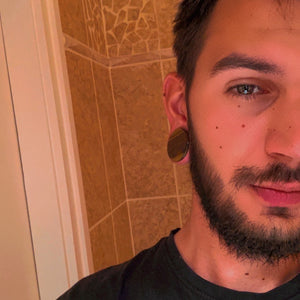 Juhász Roland
Qualité géniale et je me sens valorisé en tant que client, 10/10 je recommande
 Tayla Nicole
LES MEILLEURS !!!
ils arrivent tellement vite !! les meilleurs plugs avec le meilleur service client ❤️(et des autocollants trop cool)
 Robyn McGauran
J'ai commandé quelques paires de plugs qui n'allaient pas, j'ai contacté le service client et ils ont été tellement sympathiques et extrêmement rapides à me répondre. J'avais déjà commandé ici et chaque plug et tunnel que j'ai reçus sont d'une qualité extrêmement élevée et magnifiques. Je ferai de custom plugs ma source principale pour tous mes bijoux :)
 Jason Edwards
Super expérience avec Custom Plugs
Super expérience avec custom plugs ! Très serviables et très fiables. Je recommande vivement ces gens ! Carmie a été d'une grande aide pour traiter ma demande et la communication a été vraiment régulière. Merci à tous !
 Suhail Gaztambide
J'adore Custom Plugs
J'adore Custom Plugs. Ils ont la meilleure qualité en matière de plugs, un choix de plugs tellement vaste et le service client est superbe. Je n'achète que chez eux et être un client fidèle a ses avantages. Vous vous souviendrez de moi quand vous achèterez vos plugs, car vous ne le regretterez pas.
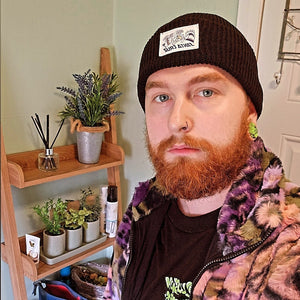 Alexander Lewis
10/10 sur toute la ligne pour leurs services
J'utilise Custom Plugs depuis quelques années maintenant et la qualité de leurs produits est toujours 11/10. J'ai récemment acheté des tunnels en onyx noir et j'ai aussi reçu une paire de plugs gratuite tout aussi géniale ! Je recommanderais cette entreprise à n'importe qui sans hésiter !
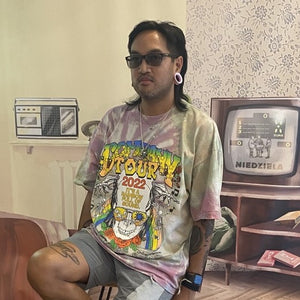 Lyndon Gabuat
Plein d'amour la Fam !!!!
J'achète ici depuis un certain temps. Toujours une super qualité, toujours des produits géniaux. Merci beaucoup pour les cadeaux !!! Restez en or !!!
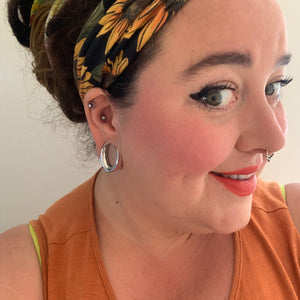 Simone Evans
Tout simplement les meilleurs !
Oui, il y a d'autres endroits où acheter vos plugs, mais ces gens sont exceptionnels, leurs plugs et tunnels sont les meilleurs qu'on puisse acheter, leur service client dépasse toutes les attentes. Ils sont super cool et je les note 100 % ! J'adore absolument mes nouveaux saddle plugs. Merci !
 Saffron Spellman
J'adore absolument cette entreprise
J'adore absolument cette entreprise ! Je fais mes achats ici depuis que j'ai commencé à étirer mes oreilles il y a de nombreuses années ! Une qualité incroyable et toujours de si beaux emballages ! Ils ont littéralement un plug pour chacun !
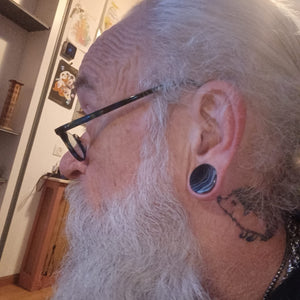 Alexander Dings
J'ai été très bien aidé, je suis content de mes plugs
Après un problème de livraison externe, tout a été très bien résolu, je suis très content du service. Je suis très content des plugs. La communication était très bonne.
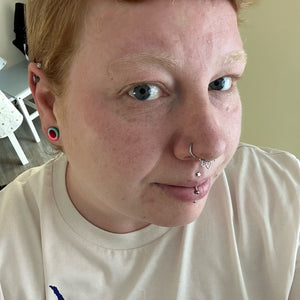 Danielle Walsh
Mes dernières acquisitions chez UK Custom Plugs (barre industrielle comprise). Je les adore ! Ils ont tellement de choix que ça me donne le tournis, honnêtement 🤯 je crois que j'ai commandé trois fois distinctes maintenant et je reviendrai assurément commander encore 🤩 en plus la livraison est super rapide !
 Chris McCabe
Tout chez eux est 10/10 !
Tout chez eux est 10/10 !! Un choix énorme, surtout pour les bijoux de plus grand gauge, là où les autres vendeurs ont tendance à s'arrêter au-delà de certaines tailles. Des réponses rapides et un service client incroyable. Expédition rapide également, ainsi que des produits joliment emballés. Je n'achèterais nulle part ailleurs après avoir découvert Custom Plugs !! :)
 Laura Chesters
Service client fantastique, le problème était…
Service client fantastique, le problème a été résolu très rapidement, un grand merci à lotti pour son excellent service, je rachèterai sans aucun doute 😊
 Laura Howard
La seule boutique d'étirement que j'utiliserai !
Je fais mes achats dans cette boutique depuis un moment, pour des tapers et plus récemment des piercings. Je dois dire qu'ils ont une gamme tellement géniale, à un super prix, avec un choix de tailles fantastique ! Ils prennent aussi vraiment soin de leurs clients réguliers, je les ai recommandés à tous mes amis ! Je n'achèterais nulle part ailleurs !
 Mathilde Comby
Équipe formidable !
Je me suis trompé et j'ai commandé la mauvaise taille pour mon bijou, et je peux honnêtement dire que je n'avais jamais vu une communication et un accompagnement aussi géniaux de la part d'une entreprise. L'équipe de Custom Plugs n'a été qu'adorable et efficace tout au long du processus de retour de ma commande. Je recommanderai assurément chez eux et cette fois, je ne me tromperai pas :)
 Ian Cooper
Service incroyable de Custom Plugs (encore une fois !)
J'ai commandé une paire de tunnels en améthyste chez Custom Plugs, puis j'ai envoyé un e-mail pour demander s'il serait possible d'avoir une paire aussi foncée que possible. En quelques minutes, j'ai reçu une réponse d'Emily disant qu'elle ajouterait une note à ma commande et qu'ils feraient de leur mieux pour sélectionner une paire qui me plairait. Le lendemain, une magnifique paire de tunnels en améthyste foncée est arrivée. Taille parfaite, finition parfaite, couleur parfaite, tout parfait. Bravo et merci Emily, et à toute l'équipe de Custom Plugs ! :-)
 Greg Dearman
Les meilleurs du marché.
« Des produits de très grande qualité, toujours emballés avec soin et proprement.
J'utilise Custom Plugs depuis que j'ai commencé à étirer mes oreilles et aucune autre entreprise n'offre une gamme aussi large, un aussi bon rapport qualité-prix et autant de passion. »
 Samantha Hopkins
Génial !
« Des plugs/tunnels de qualité. Livraison rapide, souvent avant la date prévue (même pendant l'affreuse pandémie de COVID-19, ce à quoi je ne m'attendais pas !). Service client formidable. Rien à redire !
Je continuerai à acheter des plugs et des tunnels à l'avenir :) »
 Edward Haskell
Tunnels à visser en acier noir
J'ai récemment commandé les tunnels en acier noir (à vis) et je ne pourrais pas être plus content. Faciles à mettre et à enlever, et ils sont superbes en plus.
 Benjamin Pritchard
Custom Plugs, c'est le meilleur.
Depuis que j'ai découvert custom plugs, je n'ai acheté nulle part ailleurs, ils ont été formidables pour la qualité, le choix et le service client, ils m'ont même envoyé des plugs gratuits sur ma dernière commande... Au top à tous points de vue.
 Georgiana Stoian
Beaux produits et service client incroyable
J'ai commandé une paire de plugs chez eux.
Nous avons eu un petit souci avec la livraison à cause du service postal, mais Miye du service client a été extrêmement serviable et a tout réglé rapidement et sans tracas de mon côté.
On a répondu à mon e-mail dans les 12 h suivant son envoi.
Les plugs sont arrivés et ils sont encore plus beaux que sur la photo du site, et d'une qualité incroyable.
Je recommanderai assurément. Je suis fan de leurs produits.
 Ryan Hitchman
Un service sans égal
Chaque fois que j'achète chez Custom Plugs, je sais que je suis apprécié en tant que client, j'ai eu quelques incidents où je me suis trompé d'adresse ou où j'ai eu besoin d'aide et ils ont toujours été ravis de m'aider. Je n'achète nulle part ailleurs désormais, leurs produits sont de très grande qualité et leur service client est inégalé et personnalisé. Emily, en particulier, est une véritable perle. Merci à vous !
 Gordon Cruickshank
J'adore Custom Plugs
J'adore absolument custom plugs, c'est ma nouvelle addiction ! Produit de grande qualité, ils utilisent une gamme variée de matériaux pour fabriquer leurs produits, donc il y a vraiment de quoi plaire à tout le monde, large choix de couleurs et de styles. L'expédition est toujours super rapide et le service client est vraiment numéro 1 ! Je recommande vivement
 Charlotte Oates
Custom Plugs, c'est incroyable
Custom plugs sont incroyables et je n'achèterai nulle part ailleurs pour les besoins de mes oreilles ! Malgré les problèmes de livraison de ma dernière commande, custom plugs m'a envoyé une toute nouvelle commande qui est arrivée le lendemain et m'a offert un bon de £20 pour le désagrément, ce qui m'a vraiment fait très plaisir :) C'est comme ça qu'on fait du bon service, les amis ! Je viens de m'offrir un petit plaisir avec mon bon, le meilleur début d'année 2022 ! Merci custom plugs !!!
 Rosa Gonzalez
J'adore Custom Plugs !!!
J'adore Custom Plugs !!!! Ils ont toujours des designs géniaux et ça aide beaucoup pour étirer mes oreilles.
 David Miškulin
Avis honnête :))
Je n'ai eu que de très bonnes expériences avec UkCustomPlugs. Les plugs sont fidèles à la taille, les designs sont les mêmes en vrai que lorsqu'on les choisit en ligne et la qualité des plugs est super. Pour l'instant, je n'ai que des tunnels en métal noir et doré, des gouttes gravées en verre et des gouttes gravées en bois, et je n'ai eu aucun problème ni avec les plugs ni avec l'emballage et l'expédition. Je suis très content et j'ai hâte d'en commander d'autres :))
 Michelle Yates
Plugs incroyables, service sympathique
Des plugs géniaux, un service aimable. Leurs différents styles de plugs et de bijoux sont à tomber, pour tous les styles et tous les goûts. Pourquoi ne pas y jeter un œil. Génial aussi car j'ai de grands gauges, donc ça convient aussi pour ça.
 Katie Partridge
Vivement recommandé
Entreprise absolument formidable ! Service toujours rapide et produits de grande qualité, et ils chouchoutent leurs clients avec des offres et des récompenses ! Je ne les recommanderai jamais assez.
 Wissam Baltaji
Service client génial
J'ai d'abord eu quelques problèmes avec ma commande, mais grâce à Miye, qui m'a beaucoup aidé et a suivi la commande jusqu'à ce que je la reçoive. C'était aussi ma première commande chez Custom Plugs, et ce ne sera pas la dernière, promis. Je ne peux pas exprimer à quel point je suis content de mes plugs ; ils sont de grande qualité, et vous ne serez pas déçu.
 Brian Morris
custom plugs ou rien
custom plugs est la meilleure entreprise chez qui commander. au fil des années où j'ai commandé chez eux, je n'ai jamais eu le moindre problème avec une commande et la livraison est relativement rapide. Ça vaut le coup de se créer un compte chez eux car ils accordent vraiment de l'importance à leurs clients et c'est la raison pour laquelle la majorité de ma collection vient de custom plugs, parce qu'on se sent valorisé en commandant chez eux.
 Andrzej Pakuła
La meilleure marque que j'ai utilisée depuis longtemps
Je commandais mes piercings auprès de plusieurs entreprises différentes, mais j'ai fini par n'avoir toute ma collection que de customplugs, car leur qualité dépasse celle de toutes les autres marques.
Je commande des plugs une fois tous les quelques mois car ils durent vraiment, et c'est juste pour agrandir ma collection.
Les nouveaux plugs serpent en métal sont absolument géniaux et se placent parfaitement.
Pour tous ceux qui disent que customplugs c'est cher, peut-être un peu, mais c'est parce que leur qualité surpasse les autres marques et que le service client fait vraiment bien son travail !!
Recommandé à 100 % !!
 Nattalea H
La meilleure entreprise de bijoux !
Je n'irai jamais ailleurs pour des bijoux. L'emballage est magnifique, durable et recyclable, ma commande est toujours expédiée le jour même et le service client est sans égal. Les tailles de leurs plugs sont exactes et de la plus haute qualité. Honnêtement, je ne recommanderai jamais assez ces gens !
 Emma Demetriou
Je n'achèterais nulle part ailleurs !
Je n'achèterais nulle part ailleurs !
Mon/ma partenaire et moi achetons chez Custom Plugs depuis des années et avons toujours reçu des produits d'une qualité absolument irréprochable.
J'ai récemment été en contact avec Miye pour m'aider avec un échange et le service client dont j'ai bénéficié était plus que fantastique, tout a été réglé si rapidement.
Je ne saurais trop le recommander, merci à l'équipe 👌
 Claire Reynolds
Service client exceptionnel
J'ai bénéficié d'un service client fantastique de la part de Miye pour régler un problème concernant une paire de plugs que j'avais achetée. Contact super rapide & efficace par e-mail. Non seulement les plugs sont magnifiques, mais l'équipe est tellement sympathique & serviable. Je n'achèterais mes plugs nulle part ailleurs désormais.
 Jordi Hunsdale
Je ne peux que recommander Custom Plugs :)
Boutique en ligne absolument géniale, tellement de plugs, de tunnels et de vêtements différents parmi lesquels choisir, et l'équipe est vraiment très sympathique en plus, et ma livraison est arrivée exceptionnellement vite.
 Jim Brooks
La meilleure boutique de plugs & bijoux
Je fais mes achats chez Custom Plugs depuis des années maintenant et je n'ai jamais été déçu, j'ai acheté des bijoux, des vêtements, des étuis, des plugs, presque tout ce qu'il y a sur le site et pas une seule fois je n'ai été déçu de mon achat, mon achat le plus récent était un hoodie, un ensemble de tunnels en silicone et une bague, ils m'ont offert un pin's gratuit parce que je suis un client de premier plan, les petites attentions comme ça comptent vraiment, je les recommanderai à jamais à quiconque cherche des plugs ou des bijoux de piercing, des hoodies ou des t-shirts, quoi que ce soit, ces gens ne déçoivent PAS.
 Hannah Campbell
L'entreprise la plus serviable qui soit
J'ai commandé des plugs et on m'a informé qu'un des ensembles était en réalité indisponible - Emily a été géniale et m'a aidé à trouver un ensemble similaire !! Malheureusement, l'ensemble similaire était des plugs simple évasé et je ne fais pas confiance aux petits joints en caoutchouc qu'ils nécessitent. Heureusement, Emily a ENCORE été là pour moi et m'a envoyé les plugs d'origine que j'avais commandés dès qu'ils ont été en stock, EN PLUS d'un ensemble gratuit de plugs différents !! Service client 10000/10
 Andrew Chapman
Super service.
J'ai passé une commande tard le mercredi. J'ai remarqué que je m'étais trompé quand la confirmation de commande est arrivée. J'ai envoyé un e-mail immédiatement et j'ai eu une réponse dès le lendemain matin.
Mon problème a été réglé tout de suite sans histoires et j'ai reçu ma commande aujourd'hui.
Merci à Miye qui s'est occupé de ma demande et de ma commande. Super service.
 Michaela Lloyd
Fantastique comme toujours
Honnêtement, je ne recommanderai jamais assez Custom Plugs ! Ils ont toujours un super service client, mais je tiens à dire un immense merci à Emily, avec qui j'ai échangé pendant quelques jours au sujet d'un poids d'oreille précis que je voulais, je suis tellement reconnaissant qu'on ait fini par trouver une solution ! Emily a été absolument fantastique et patiente avec moi ! Merci encore Emily !
 Chloe Britton
Service client fantastique !
Je suis très content de mon expérience de commande chez Custom Plugs ! C'était ma première commande chez eux et il y a eu un souci avec ma boîte postale, je vis sur une base en Allemagne avec une boîte postale américaine. J'ai échangé avec Emily et Miye, toutes deux formidables. Elles ont toutes les deux veillé à ce que je reçoive ma commande, même si elles ont dû essayer plusieurs options pour me la faire parvenir. Custom Plugs s'est surpassé pour me faire parvenir ma commande !
 Jack Dolan
J'utilise Custom Plugs depuis quelques années !
J'utilise Custom Plugs depuis quelques années et je n'ai rien à redire sur les bijoux ni sur le service client ! Toute l'équipe est incroyablement adorable et toujours prête à aider.
 Jordan Stable
Produits incroyables
C'est de loin le meilleur endroit pour se procurer des tunnels/plugs, ils ont la meilleure qualité, d'excellents délais d'expédition et un très bon service client, j'achète ici semaine après semaine et je recommanderais à quiconque de les essayer.
 Libby Lenton
Excellent !
J'ai commandé plusieurs fois chez Custom Plugs et je n'ai jamais été déçu. Ils ont un excellent service client et une livraison vraiment rapide. Je ne commanderais nulle part ailleurs.
 Liam Snowden
Très satisfait de Custom Plugs !
Tellement content de Custom Plugs !! J'ai commandé des tunnels en silicone de très bonne qualité dont je suis satisfait. Cependant, un plug que j'avais commandé n'a pas été expédié avec ma commande, j'ai donc contacté le service client. Mon problème a été traité par Emily, qui a été très sympathique, serviable et a résolu le souci immédiatement sans aucun problème. Je recommande assurément d'acheter chez Custom Plugs !
 Rianna Jane
Si vous cherchez des plugs, ne cherchez pas plus loin
Si vous cherchez des plugs. Ne cherchez pas plus loin ! De loin la meilleure entreprise que j'aie jamais utilisée. Super service client. Livraison rapide et des bijoux de corps incroyablement beaux. C'est devenu un achat régulier pour moi afin de continuer à enrichir ma collection déjà épique.
10/10. 5☆
 Keith Rodger
C'est comme ça que les entreprises devraient fonctionner
C'est ainsi que les entreprises devraient fonctionner ! Un service aimable et fiable avec d'excellentes relations clients... sans parler des magnifiques produits. J'ai reçu de nombreuses livraisons de custom plugs et je n'ai jamais été déçu. Je ne recommanderai jamais assez ces gens. Si vous voulez une expérience d'achat en ligne fantastique, choisissez custom plugs. Vous ne le regretterez pas. 10/10.
 Ryan Hitchman
Un service sans égal
Chaque fois que j'achète chez Custom Plugs, je sais que je suis apprécié en tant que client, j'ai eu quelques incidents où je me suis trompé d'adresse ou où j'ai eu besoin d'aide et ils ont toujours été ravis de m'aider. Je n'achète nulle part ailleurs désormais, leurs produits sont de très grande qualité et leur service client est inégalé et personnalisé. Emily, en particulier, est une véritable perle. Merci à vous !
 Suhail Gaztambide
J'adore Custom Plugs
J'adore Custom Plugs. Ils ont la meilleure qualité en matière de plugs, un choix de plugs tellement vaste et le service client est superbe. Je n'achète que chez eux et être un client fidèle a ses avantages. Vous vous souviendrez de moi quand vous achèterez vos plugs, car vous ne le regretterez pas.
 Ry O'Connor
Commande de plug
J'ai récemment pris contact car j'avais commandé le mauvais produit par erreur, j'ai donc contacté custom plugs et demandé s'il était possible de retourner l'article, il n'y a eu aucun tracas, une réponse très rapide et une aide pour tout régler, un très bon sens du service client et je recommande vivement ! - j'ai été aidé par Piper
 Cindy Van Regemortel
Custom Plugs a le meilleur service client
Custom plugs a le meilleur service client, une expédition toujours rapide et une excellente qualité ! A+++ Je recommande !
 Phillip White
Hors du commun !
Une équipe absolument géniale, un service client hors du commun et une qualité fantastique ! Je fais appel à eux depuis des années et je compte bien continuer pendant encore de nombreuses années !
 Maisie Britt
Service client incroyable
L'équipe de Custom Plugs a été tellement, tellement serviable quand j'ai commandé la mauvaise taille par erreur ! C'était entièrement ma faute mais ils ont envoyé les bons dès le lendemain, m'envoyant même un plug surprise aléatoire pour le dérangement quand j'ai eu un souci ! Honnêtement, rien à redire sur le service client, et ça m'a amené à acheter la moitié des cadeaux de Noël de mon copain dans leurs rayons de plugs et d'accessoires !
 Natalie Kobylka
Entreprise absolument fantastique
Entreprise absolument fantastique. Des articles toujours de qualité, un service client sans égal. L'emballage est magnifique lui aussi.
 Tom Sheaf
Chaque paire de plugs est magnifique
J'ai entendu parler d'ukcustomplugs pour la première fois sur Instagram, et depuis je vais chez eux pour chaque paire de plugs dont j'ai besoin, je pense avoir acheté environ 60 à 70 paires de plugs chez vous et chaque paire de plugs est superbe, toujours bien emballée et le service est génial, je les recommande vivement à tous mes amis, à mes abonnés Instagram et à quiconque cherche des plugs 😊